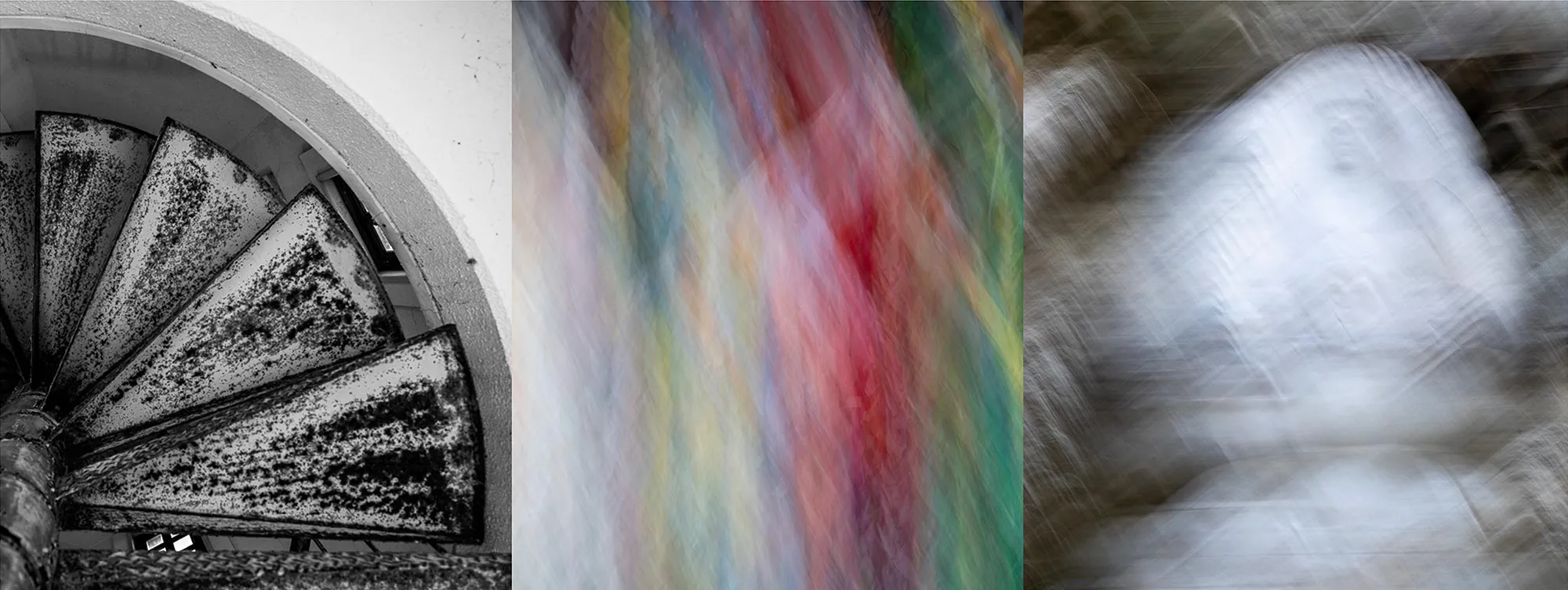
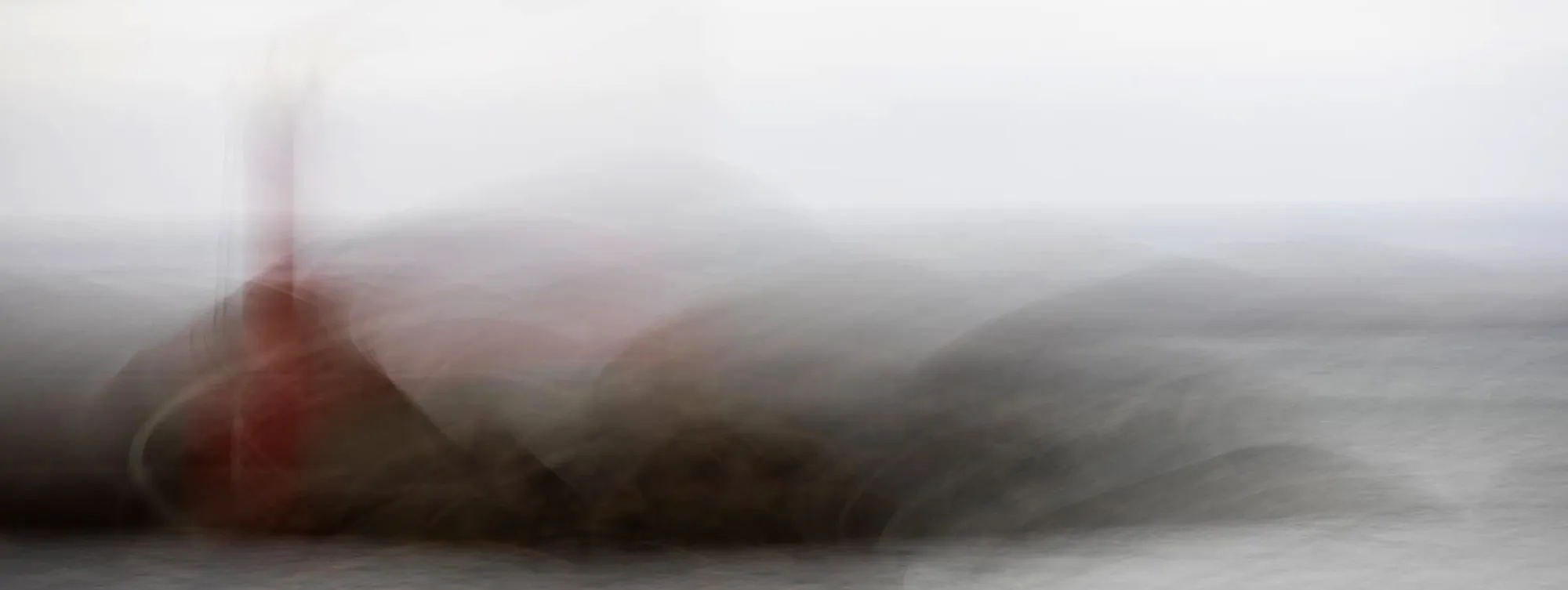
Shikoku . Fragmented Worlds

One pilgrimage route.
88 temples
Two journeys.

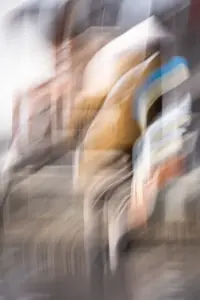
18 photographs that do not show the path itself, but rather what it leaves behind.

Triptych: Together Alone – Shikoku: Fragmented  Worlds, ICM and black-and-white photography by Marion Rockstroh-Kruft

Shikoku . Fragmented Worlds:
a path that defies complete understanding

Shikoku is not the Japan that most people know. The smallest of Japan’s four main islands is rugged, tranquil and deeply rooted in its traditions.

For centuries, pilgrims have been walking the 88-temple route, not as tourists, but as seekers.

I walked it in two stages: in 2025 and 2026, on my own, with a backpack, for the first time in my life. A total of just under 950 kilometres.

Travelling alone also meant confronting one's own loneliness: a complete detachment from normality, a journey into a culture I hadn't grown up in. This was more profound in the second stage than the first, but better processed.

This strangeness was met with an incredible warmth, real and often boundless. It did not resolve the loneliness. It simply stood alongside it.

What the journey offers is not merely comfort. It offers confrontation.
A golden flame beside a dragon on a temple roof. A solitary figure climbs a stone staircase into the silence. A tunnel on the south coast curves out of view; light streams through its open side at regular intervals.

This visual language did not emerge during the journey. It emerged afterwards, whilst working on the book project between the two stages, when it became clear that the tension between the two photographic approaches reflects precisely what the journey itself embodies:
the fluid and the solid, the spiritual and the brutally real.

The series features 18 works - single images, diptychs and triptychs - presented in a non-chronological order.
It follows the rhythm of the journey itself: setting out, pausing, and moving on.

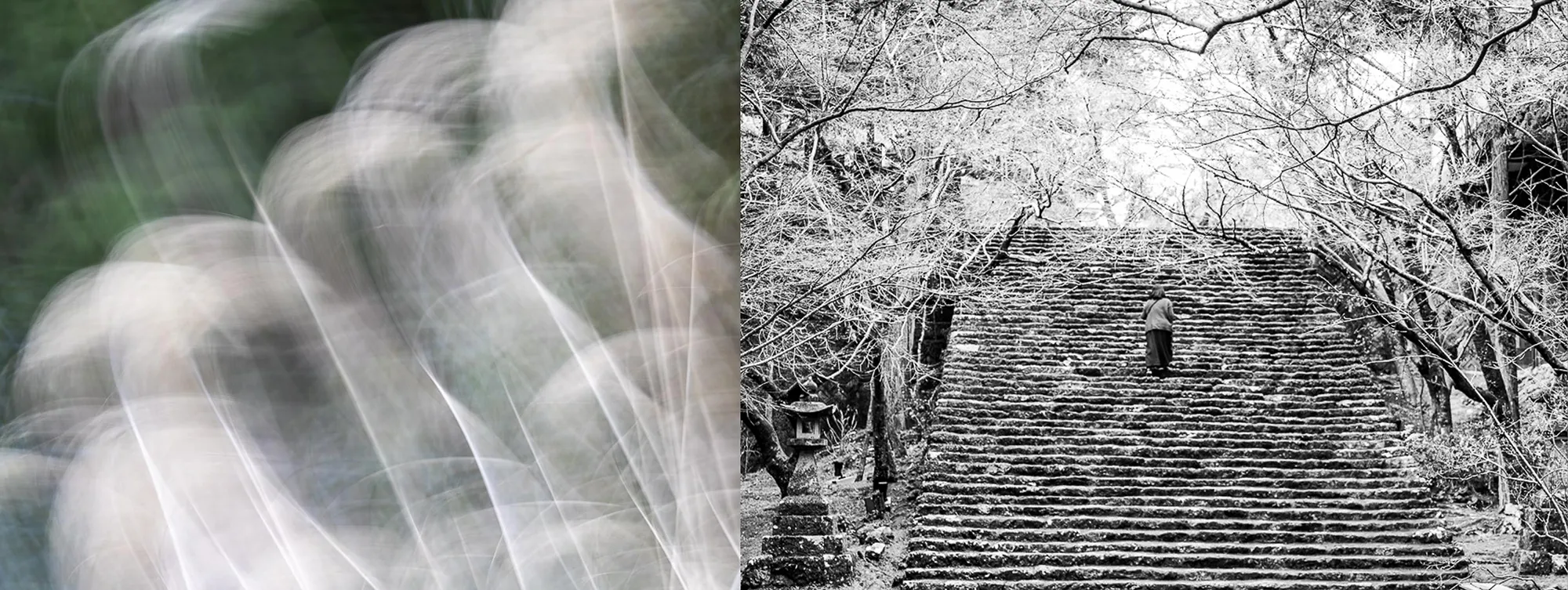
Diptych 'Threshold' – Shikoku: Fragmented Worlds, ICM and black-and-white photography by Marion Rockstroh-Kruft

Threshold:
I. The Unseen
II. The Ascent

Some places carry more than meets the eye. Veils of light, figures perhaps, or what remains of them. Their lines lead over to the bare branches of a temple garden, as if two worlds shared the same breath.
A woman climbs a moss-covered stone staircase, step by step, without hurry. She knows this path.
What came before us here, and who still walks when we have long moved on, remains an open question.

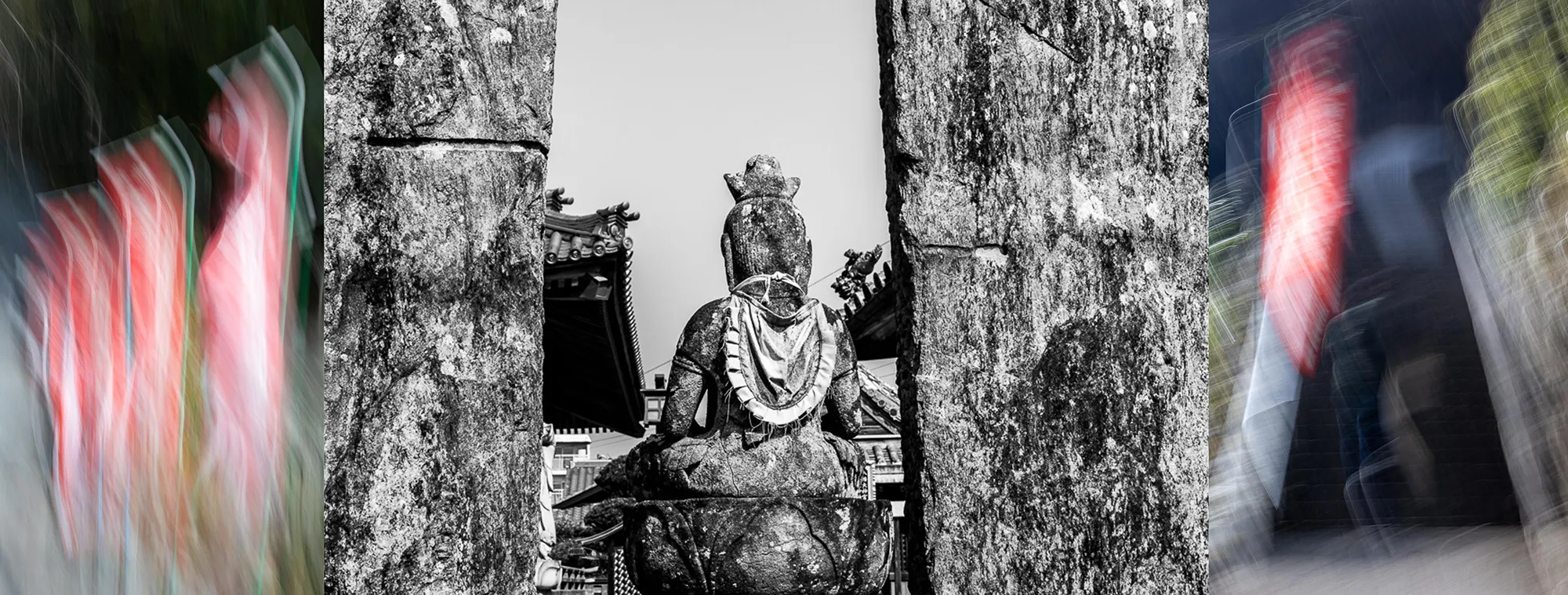
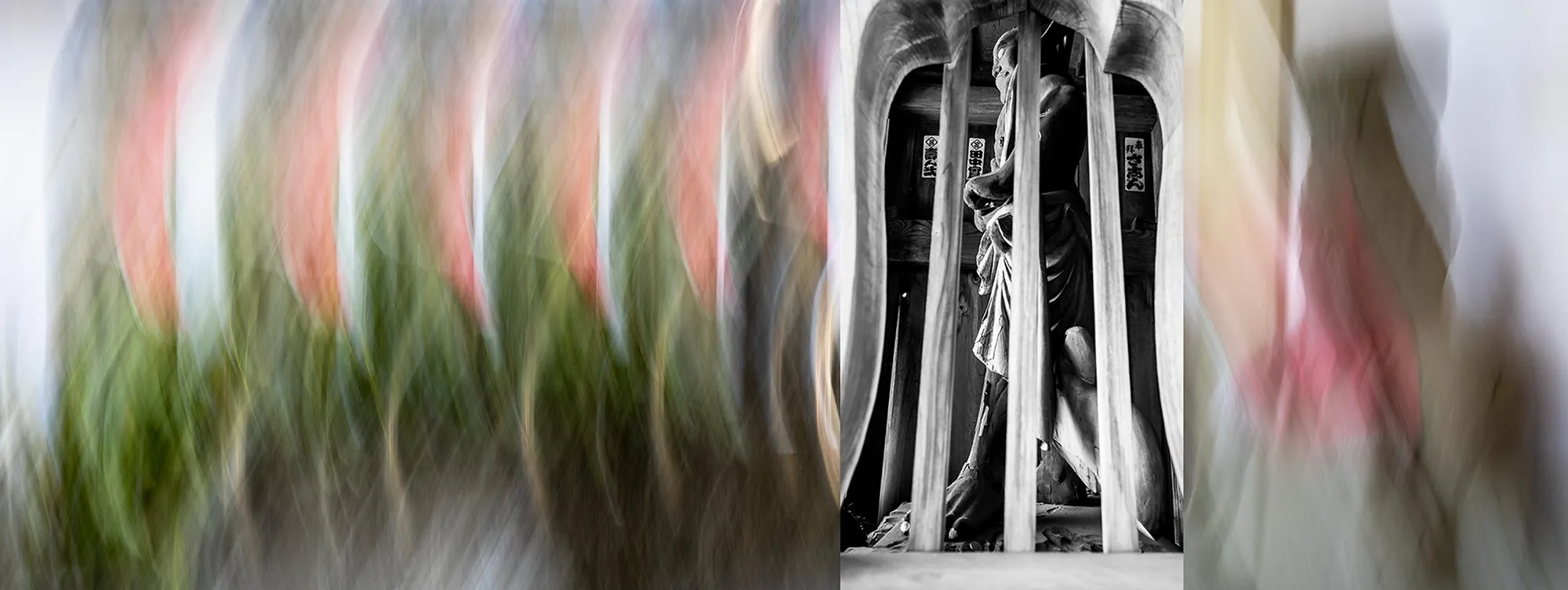
Single image: Guardian – Shikoku: Fragmented Worlds, ICM photography by Marion Rockstroh-Kruft

Guardian

At a wayside shrine, a figure emerges from stone and motion. The camera did not capture it, it released it.
Something about this figure does not step back. It is not decorative, it is present. Since when, one cannot say.
On Shikoku, such places stand still while everything around them comes and goes.

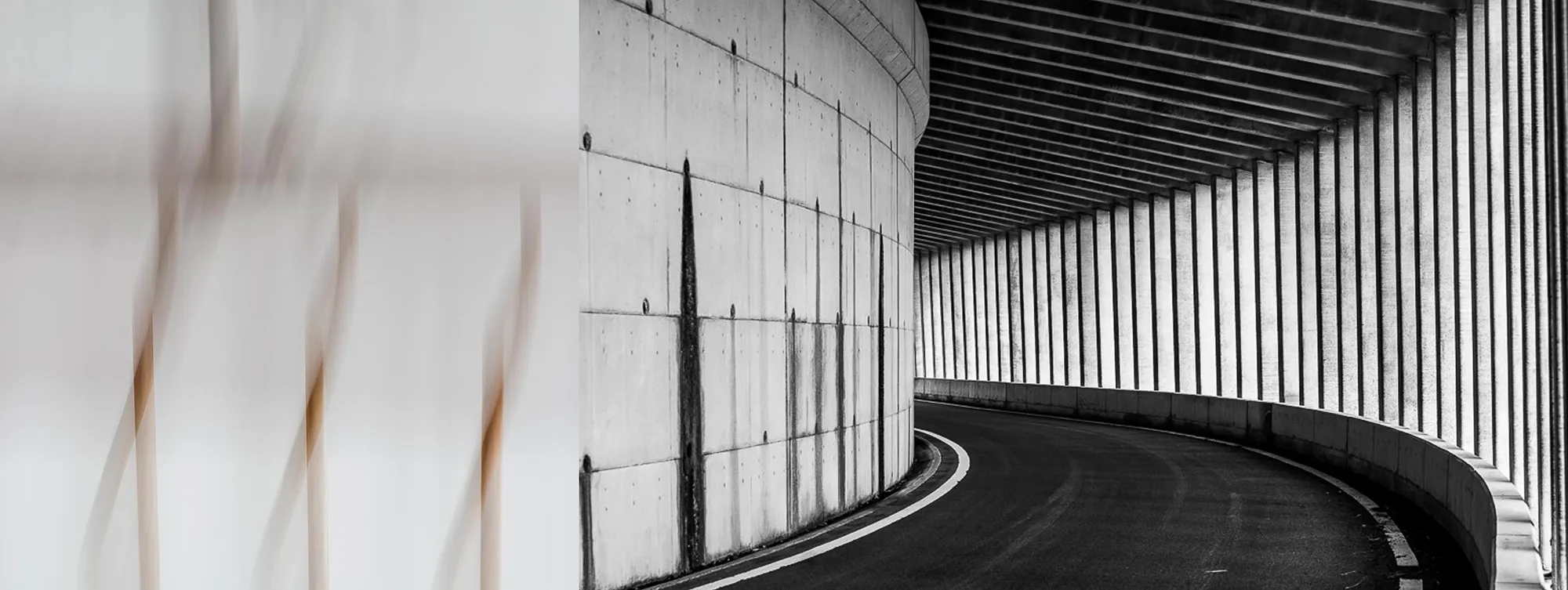
Diptych: Two Worlds – Shikoku: Fragmented Worlds, ICM and black-and-white photography by Marion Rockstroh-Kruft

Two Worlds:
I. Prayer
II. The Curve

Incense sticks burn, their lines rise and dissolve, impossible to hold onto.
A remote tunnel along the coast follows its precise curve through concrete and quiet.
Two places, which have nothing to do with each other and yet they speak the same language. The sacred cannot be sought in this way.
It finds you.

Single image: Quiet Steps – Shikoku: Fragmented Worlds, black-and-white photography by Marion Rockstroh-Kruft

Quiet Steps

On Shikoku, you don't just enter a temple, you arrive.
The path stays outside, the steps slow. No face, no name, only this quiet that arrives when you stop, just for a moment.
It is not the destination that carries you. It is the walking.

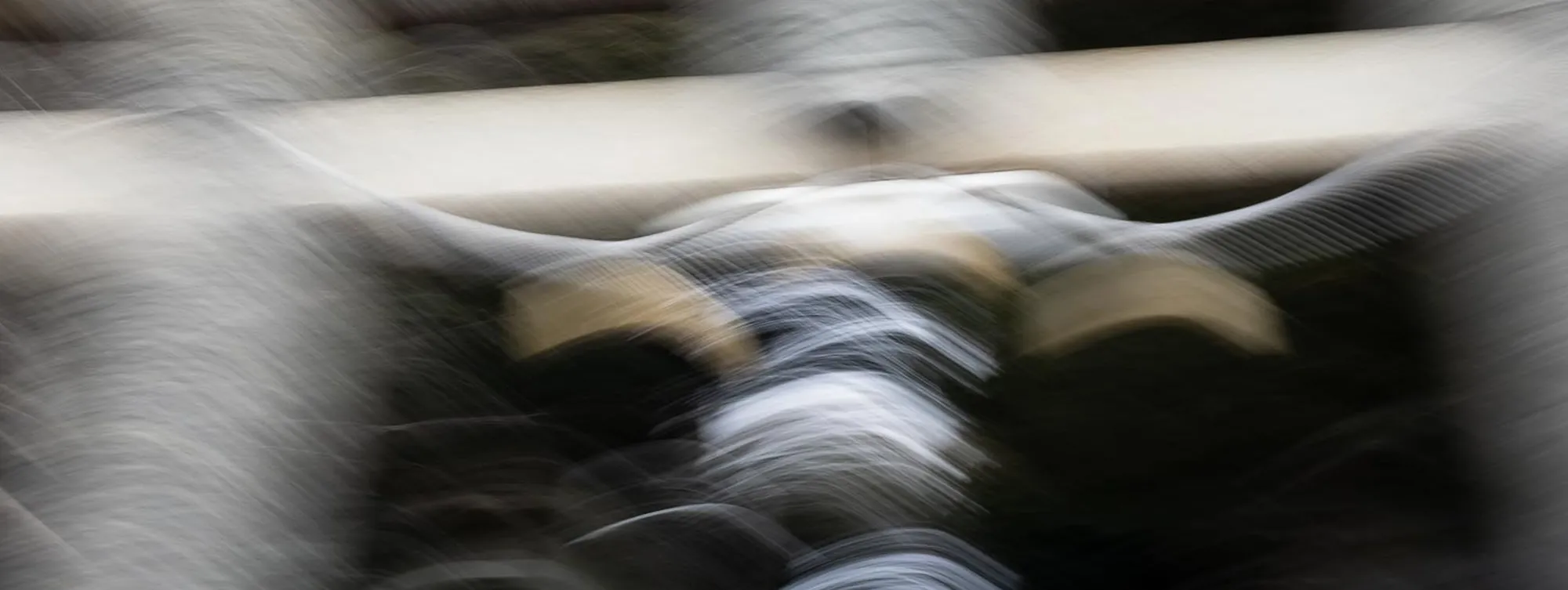
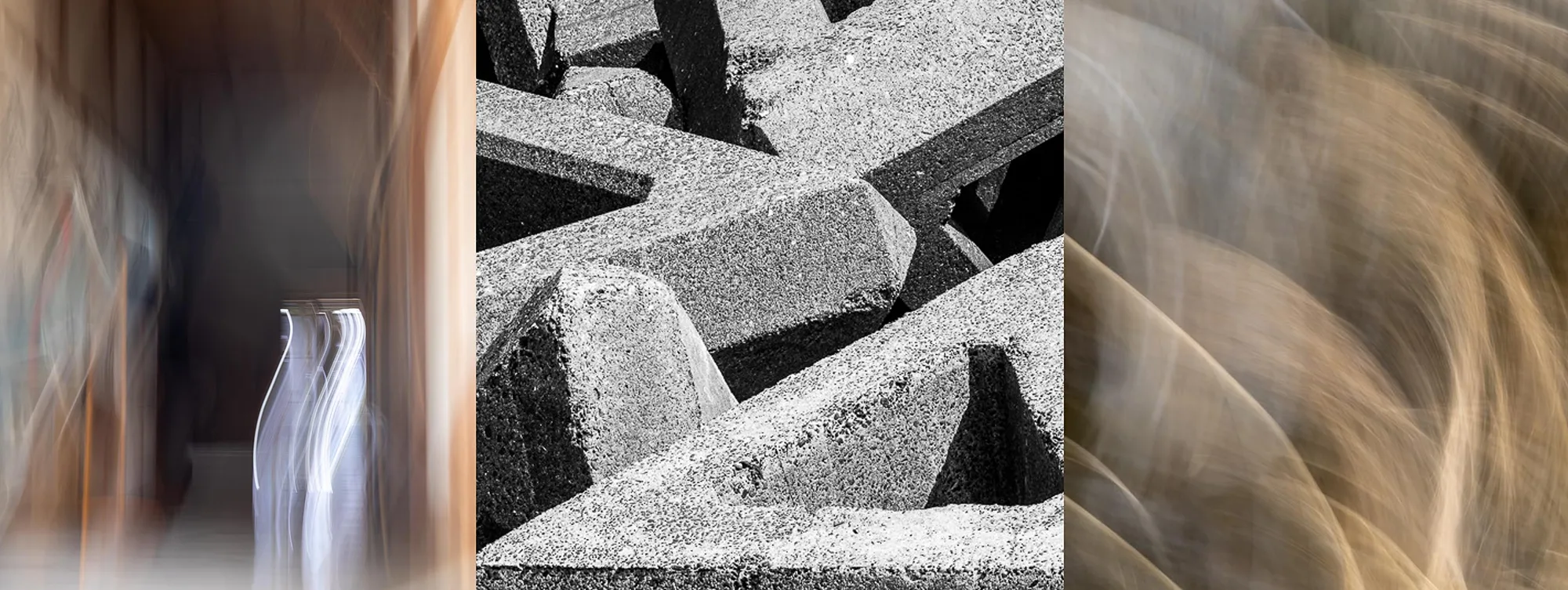
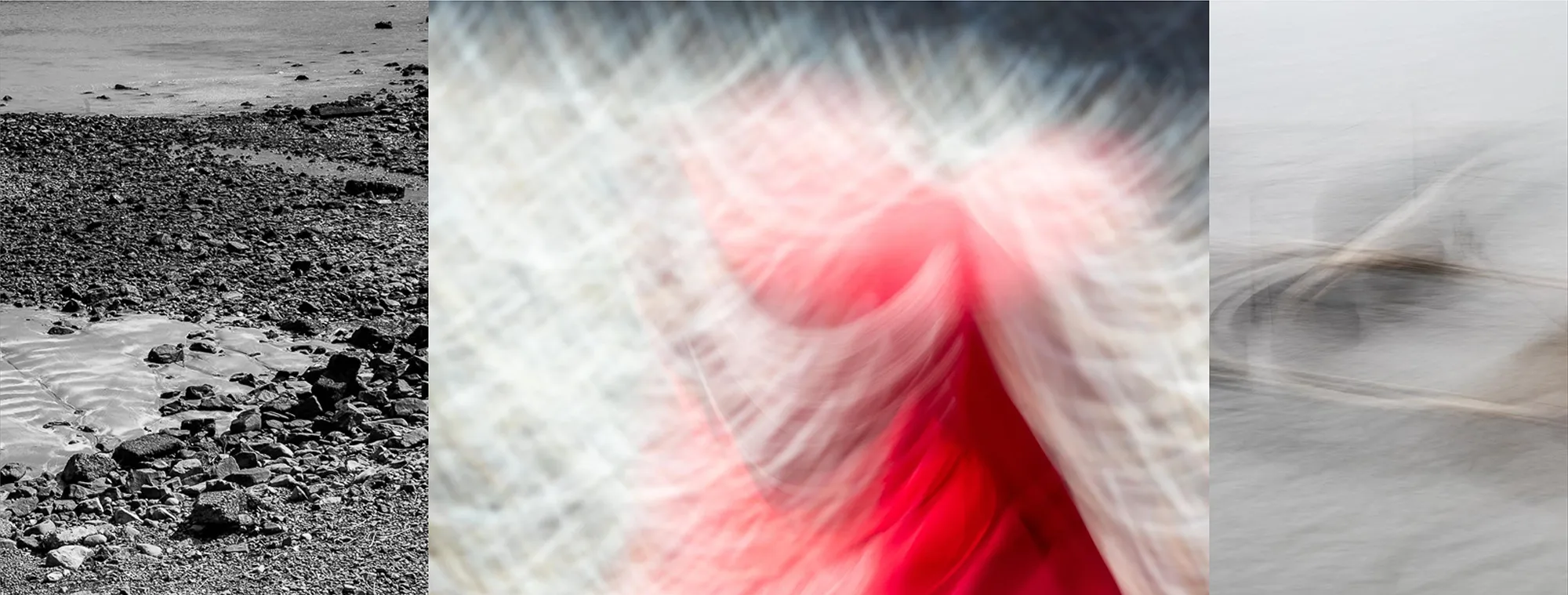
Triptych: Lines of Contact – Shikoku: Fragmented Worlds, ICM and black-and-white photography by Marion Rockstroh-Kruft

Lines of Contact
I. Presence
II. Monolith
III. Feather

Shikoku protects itself. The massive concrete blocks along the shore push back against the surf, heavy, without grace.
And yet they stand where pilgrims also walk, where light falls into temple rooms and grasses move in the wind.
You walk past it and don't ask why. You accept it as the island offers it:
without apology, without explanation.

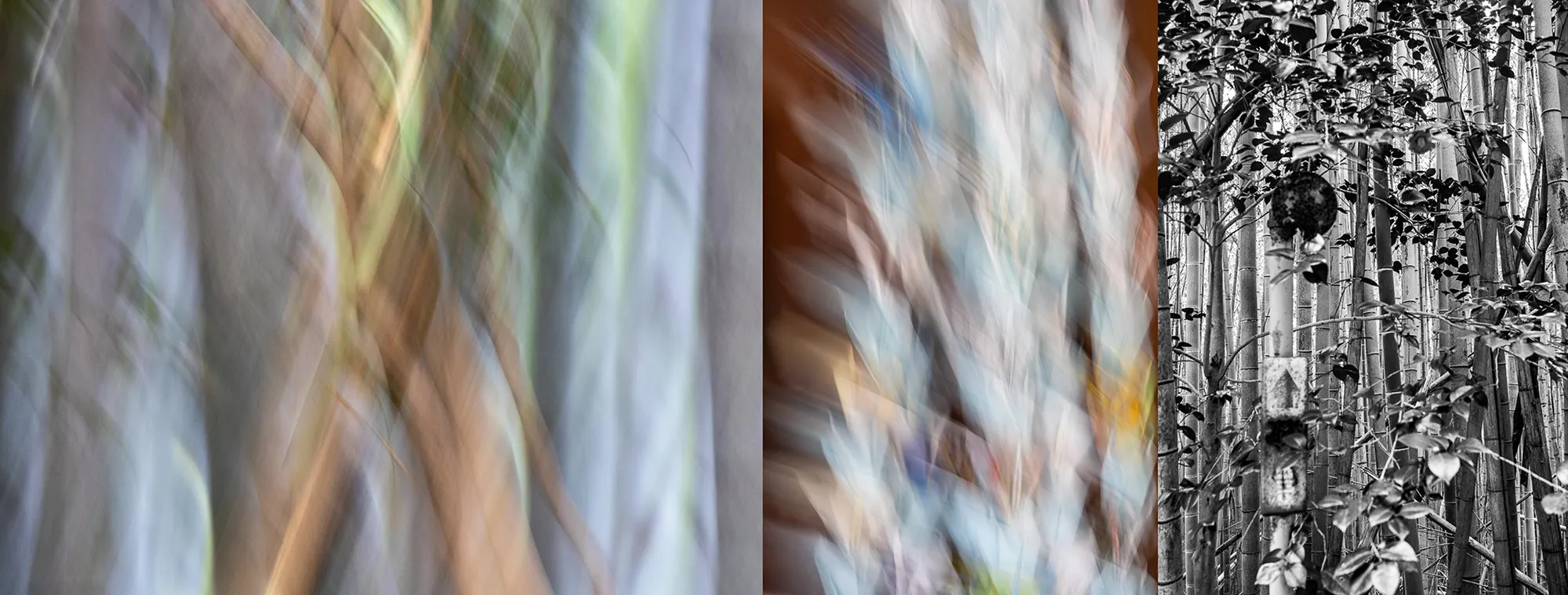
Signs
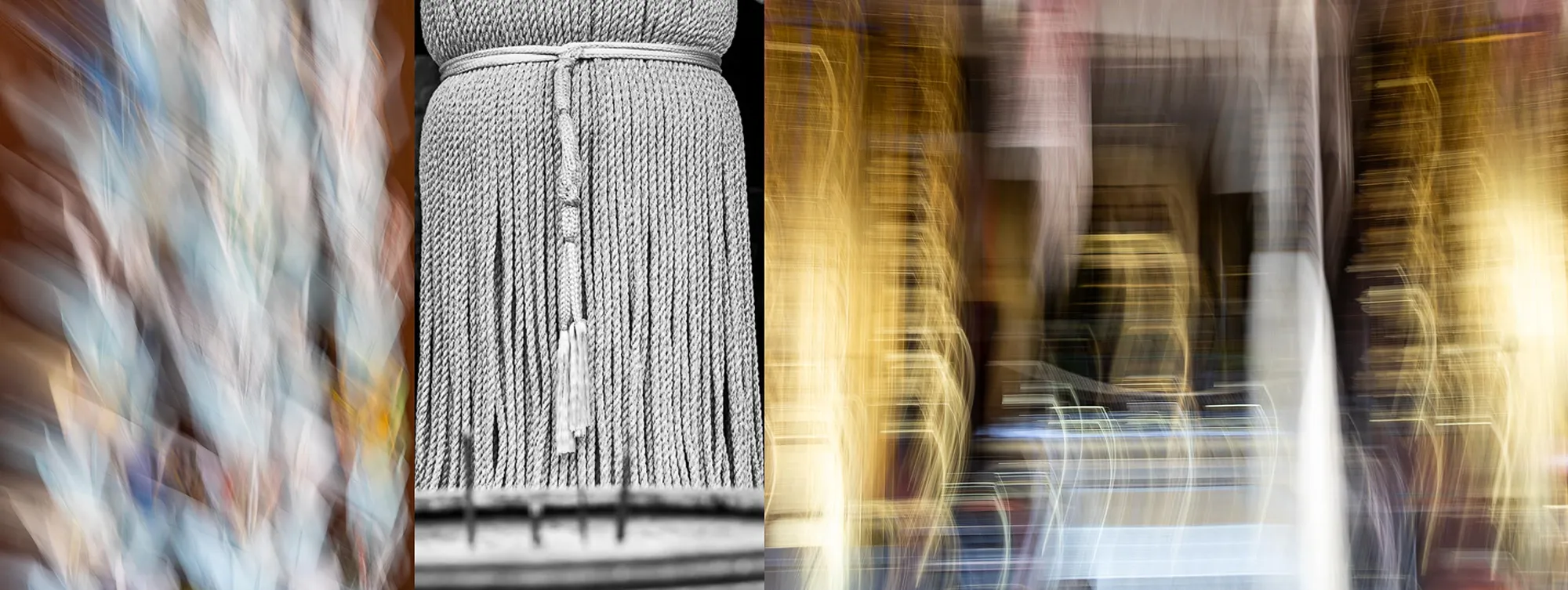
I. Colour Noise
II. Woven
III. Waymark

Those who do not look up walk past. The waymark in the bamboo forest points a direction, that is its purpose.
The woven offerings in the temple are gestures of connection. A gesture in a direction no waymark can show.
On Shikoku you will eventually learn to see both.

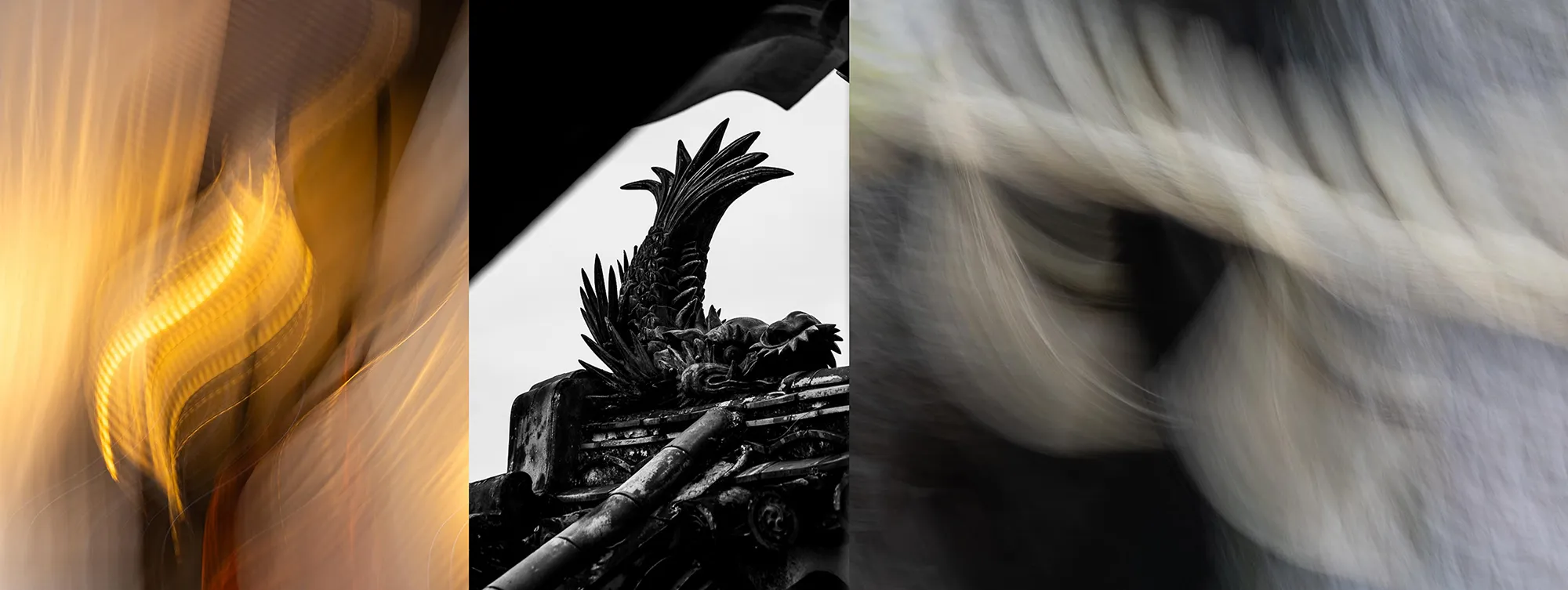
Triptych: Apparition – Shikoku: Fragmented  Worlds, ICM and black-and-white photography by Marion Rockstroh-Kruft

Apparition
I. Flame
II. Force
III. Reverberation

The dragon at the roof's edge is not a guardian. It is movement that has stilled and will not stay still.
What precedes it blazes.
What follows binds.
A different sign, the same impulse.

Triptych: Invocation – Shikoku: Fragmented  Worlds, ICM and black-and-white photography by Marion Rockstroh-Kruft

Invocation
I. Interlace
II. Impulse
III. Glimmer

There are moments in the temple where you're not sure if you are observing or participating.
One pull on the tassel, and the gong speaks. The space opens. What happens here is older than the walls that contain it.
You enter, and the room welcomes you, inward-looking and open.

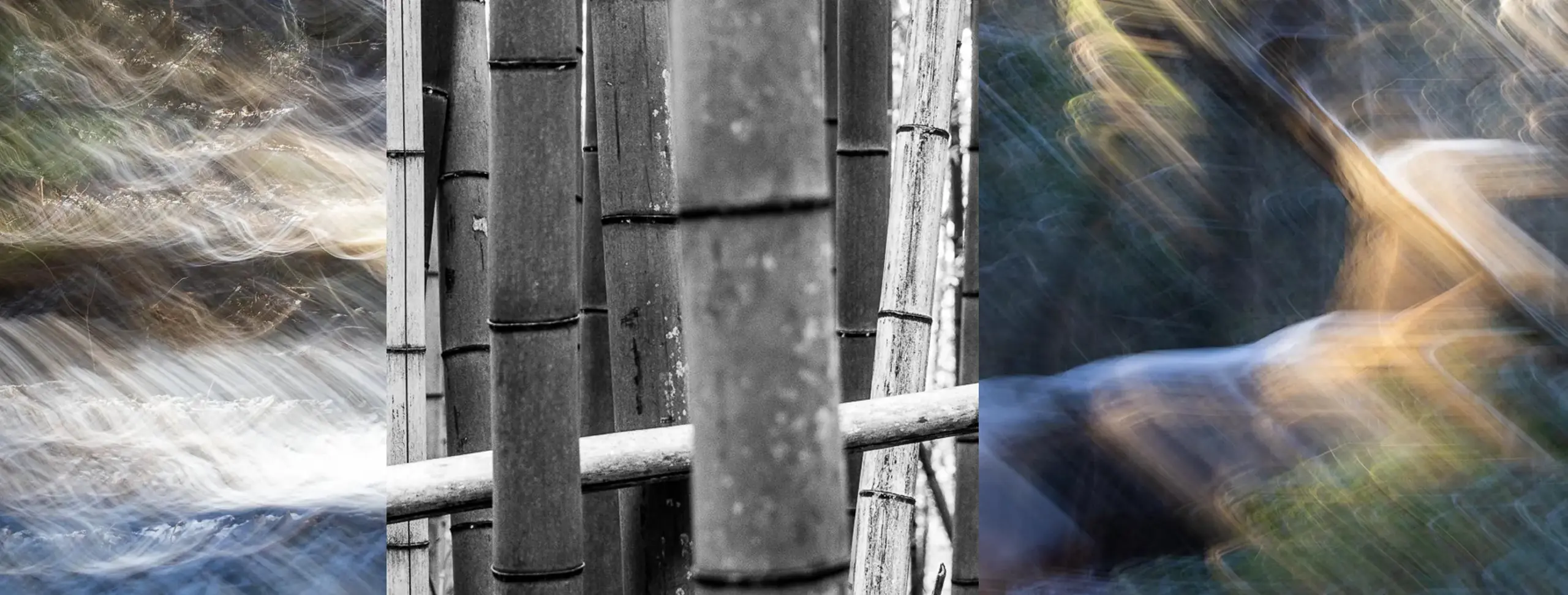
The Path Carries
I. The Rush
II. The Silence
III. The Companion

You don't notice it at first. At some point, you've arrived, right in the middle of the journey.
The water that flows wherever you go.
The bamboo swaying in the wind, unyielding.
The companion who accompanies you, silently, since the first step.
None of this is urgent.
The path carries.

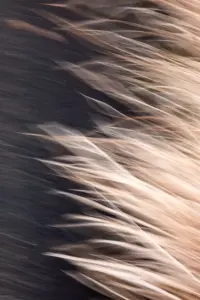
Single image: Am Rand At the Edge – Shikoku: Fragmented  Worlds, ICM photography by Marion Rockstroh-Kruft

At the Edge

It was not a special place. A main road, asphalt, noise.
And then this grass, right beside it, moving in the wind.
Light against dark, delicate against solid.
The path had nothing sacred to offer at that moment. Only this grass.

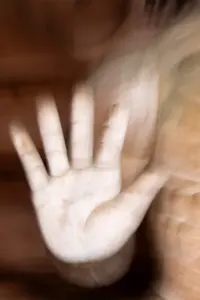
Single image: Sentinel – Shikoku: Fragmented  Worlds, ICM photography by Marion Rockstroh-Kruft

Sentinel

At almost every temple gate, he stands. A guardian, gesture raised, unmistakable.
You get used to it, you walk past.
Until he speaks directly to you one day. What he asks for is not much.
Only pause before you enter.

The Before
I. Solid Ground
II. Ember
III. Still Water

The path continues. But here, briefly, something gathers.
Solid ground that is not always there.
An ember not yet spent.
A stillness that holds.
What was is still close. What comes is waiting.

Triptych: Origin and Echo – Shikoku: Fragmented Worlds, ICM and black-and-white photography by Marion Rockstroh-Kruft

Origin and Echo
I. The Silence
II. The Force
III. The Fade

Where something comes from, what it set in motion, what remains.
The road has no end in sight.

Triptych: Together Alone – Shikoku: Fragmented  Worlds, ICM and black-and-white photography by Marion Rockstroh-Kruft

Alone Together
I. The Waiting
II. Silent Center
III. The Stranger

One step on the pilgrimage path you take for yourself.
But is that why you're alone?
Along the way, figures stand still, waiting. A silent, ever-present companionship.
The individual falls into something larger that was always there.
You go and become gone.

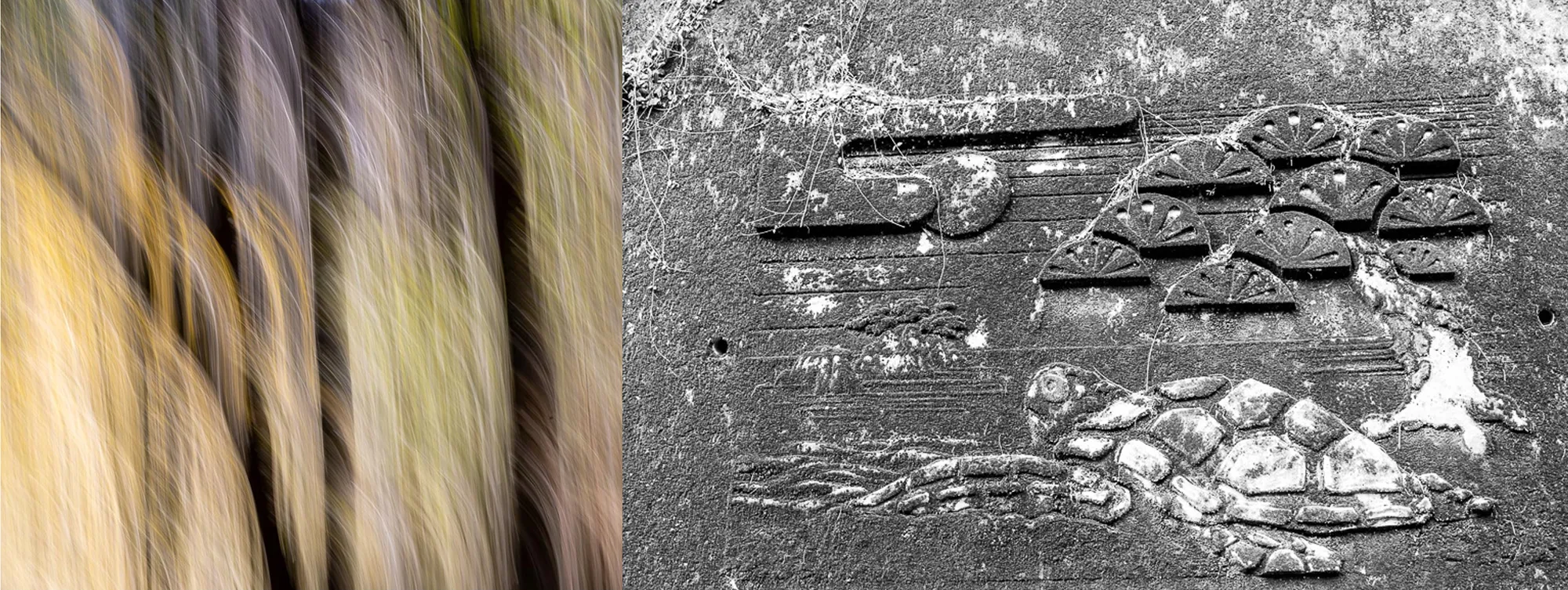
Diptych ‘Abseits Aside’ – Shikoku: Fragmented  Worlds, ICM and black-and-white photography by Marion Rockstroh-Kruft
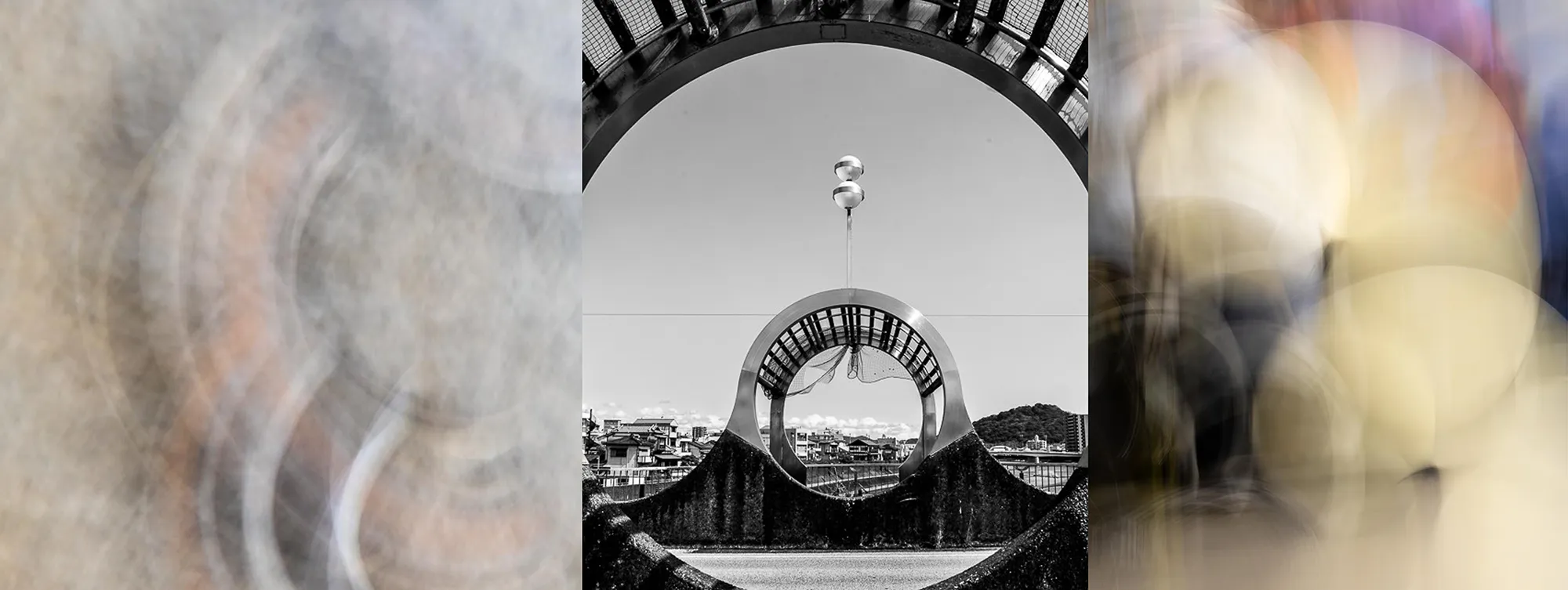
Triptych: Bridging – Shikoku: Fragmented  Worlds, ICM and black-and-white photography by Marion Rockstroh-Kruft

Aside
I. Row
II. Relief

Bridging
I. Sediment
II. Arch
III. Rhythm

The trees stand in a row and reveal nothing.
Those who only walk do not see the turtle in the wall. It has been there for a long time, unhurried.
The path eventually teaches you to slow down.

What settles, what arches, what repeats.
Bridges are not only made of stone.

Triptych Transit – Shikoku: Fragmented  Worlds, ICM and black-and-white photography by Marion Rockstroh-Kruft
Single-frame image – Shikoku: Fragmented  Worlds, ICM photography by Marion Rockstroh-Kruft

Transit
I. Step
II. Bundle
III. Trace

Signal

There are moments along the way when you feel as though something has started to move.
Not the steps you take. Something far deeper.
Being underway is not a state, but a process that continues long after the last step has been taken.

The last image.
No conclusion, no arrival.
Only this one sign in the fog, transmitting without knowing who receives.
The path continues, even if you have stopped walking.

Available Works

All 18 photographs are available as limited-edition original prints. Individual prints and triptychs. Each work is produced in an edition of 1/1, plus a maximum of 2 artist’s proofs.

Minimum size: 80 cm long edge; printing on museum-quality substrates by WhiteWall.

Prices from €1,000.
Individual production and personalised advice available on request.

Exhibitions

Shikoku . Fragmented Worlds

The Pier Mainz, Mainz
May - August 2026
7 works in the series.

Rencontres d'Arles Photography Festival, Arles OFF 2026
Les Murs Blancs Gallery
July 2026
as part of a group exhibition organised by ProfiFoto
2 works in the series.

About the Technique

The series combines two photographic approaches that could hardly be more different.

Intentional Camera Movement, by its very nature, implies a deliberate action behind the camera. It's about more than just capturing a scene; it's about guiding the viewer's eye, evoking emotion, and creating a specific mood. This can be achieved through a variety of techniques, such as panning to follow a subject, tilting to reveal a grand vista, or a dolly shot that immerses the audience in the action. Each movement serves a purpose, contributing to the overall narrative and visual language of the film.
The spiritual, the mental, the interpersonal, between myself and other pilgrims, between myself and the local people.

Classic black and white carries the real, organised world.
the physical path itself, even where the motif actually shows the forces of nature, for example with the concrete breakwaters or the tsunami warning signs along the path.

The dividing line does not run along the motif. Figures and statues sometimes appear as ICM, sometimes sharp. It runs between the inner and outer planes.

This combination wasn't planned from the outset. It emerged during work on the book project, between the two pilgrimage stages, when it became clear that only the juxtaposition of both approaches truly shows what Shikoku is and how it felt to me.

All the images were captured in-camera. No digital post-processing of the movement was carried out.
So what you see was created at the moment it was captured.

The book

Alongside the series, an artist’s book on Shikoku is being produced in collaboration with Wolfgang Zurborn.

It combines ICM photography with traditional black-and-white photography and further develops the visual language of the series.

To be published in 2026.

Every work is a fragment.

Together, they form a world that does not reveal itself as a whole.

You go through it, not over it.