
Ten black-and-white photographs capturing the light hidden in the cracks of a city.
Black-and-white photographs. Kolkata, India, 2023
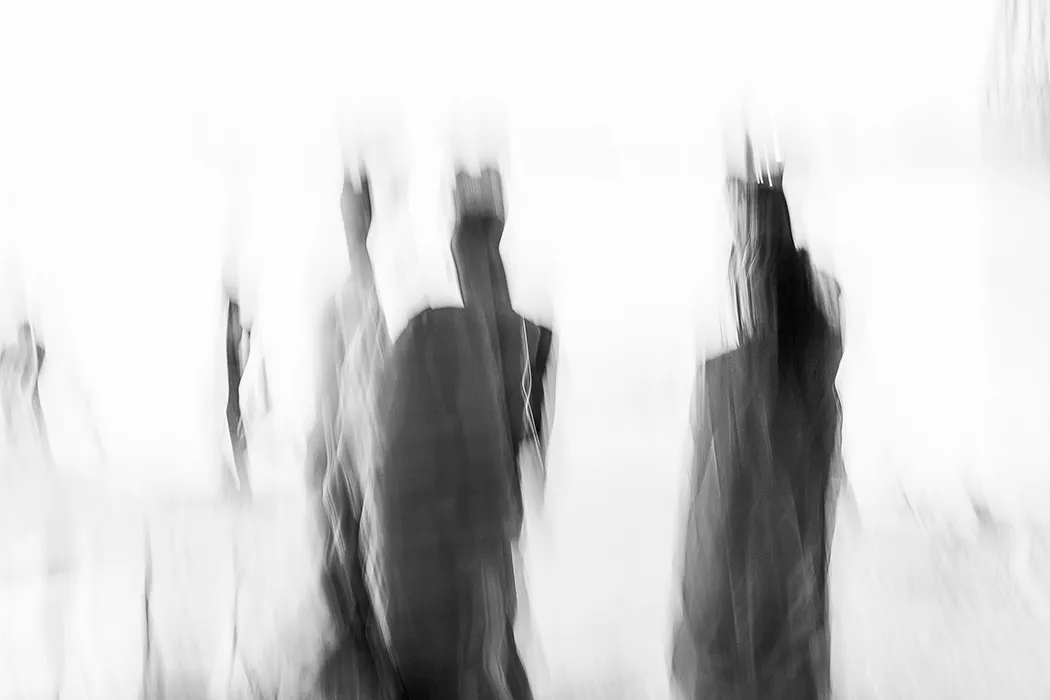
Kolkata is not a city that can be easily described. It is noisy and densely populated, full of social divisions, yet at the same time imbued with a spirituality that permeates every corner. Anyone walking through the streets here can sense:
There is something running beneath the surface. An energy that cannot be seen, but can be felt.
This series was created in November 2023. Ten photographs, taken using intentional camera movement in black and white.
No staged scenes, no set-ups. Moments that simply presented themselves. Some lasted mere seconds, others came after hours of walking through neighbourhoods that had already changed by the next moment.
The light in Kolkata is not merely a decorative feature. It is a source of strength, a promise of protection, and at times almost a threat.
In the photographs in this series, it becomes a metaphor for what sustains people:
Faith, hope, and the struggle against difficult circumstances.
And for what connects them, even when they are completely unaware of one another.
The series is divided into three chapters.
The first focuses on the city itself: its layout, its history, and the way the old and the new intertwine.
The second focuses on people, fleeting encounters and the quiet drama of everyday life.
The third delves into the unseen: prayer, nature, the dark side of what remains.
The order of the images is not chronological. It follows the light.
Kolkata bears the marks of its history. Bridges that mark social boundaries, yet bridge them at the same time. Industrial backdrops reflected in the water, transforming into something else. A skyline that isn’t really a skyline.
These three images begin where the city ceases to be merely a backdrop and starts to speak.
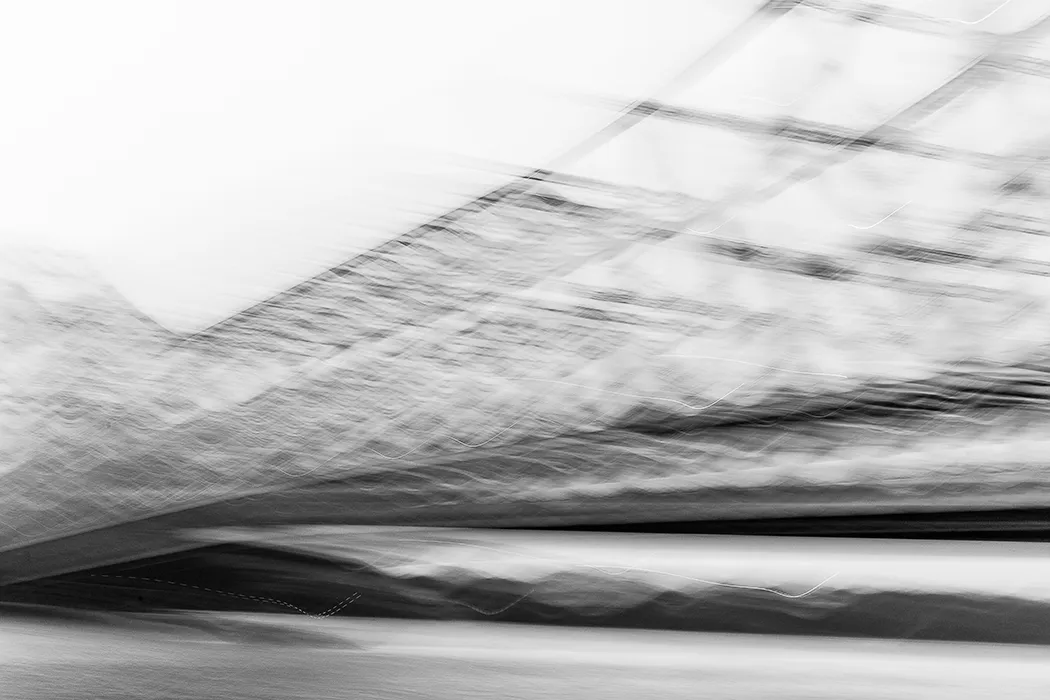
The Howrah Bridge connects two parts of the city.
Historically, it divided what it now bridges: on one side, the colonial rulers; on the other, the neighbourhoods of their employees.
This separation has shifted, but it has not disappeared. Anyone crossing the bridge today is walking through a city that bears the marks of its social divisions.
In the picture, the bridge becomes the line between light and dark. It is impossible to distinguish clearly between what it connects and what it separates.

On a busy street, a rickshaw puller makes his way through the crowd. Someone is walking on the opposite side of the road. Neither of them notices the other. As the camera moves, their bodies merge into a single figure. Two lives that briefly touch in the rhythm of the city, without knowing each other.
What appears as a single entity in a photograph was, in reality, a coincidence. Such coincidences occur all the time in Kolkata.
SOLD
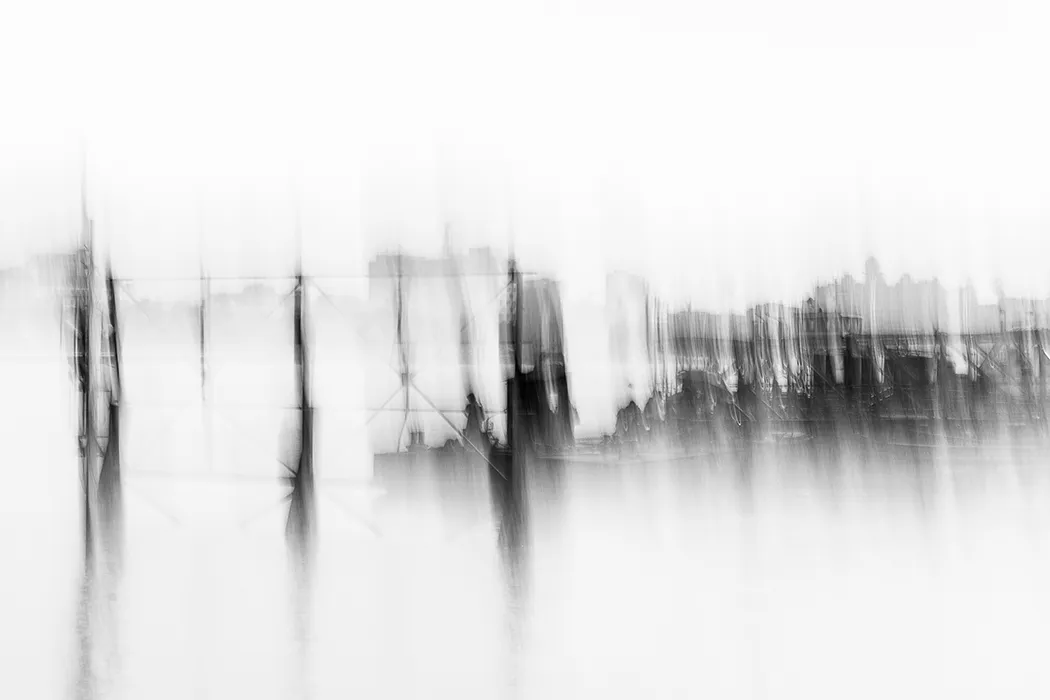
Poles stand in the water, with a ferry landing stage and industrial buildings behind them. The city’s high-rises, ruins and well-maintained façades are reflected in the water and blend into one another.
What looks like a skyline isn’t one. And yet everything that defines a city is there: decay, reconstruction, the juxtaposition of eras.
The place itself is unremarkable. In the picture, it becomes the focal point of an entire city.
In the streets of Kolkata, lives constantly brush past one another without ever truly meeting. A moment of connection, a glance, a gesture.
And just like that, it's over again.
These four images follow the people as they move through the city: alone, together, sometimes without realising that they are part of something special.
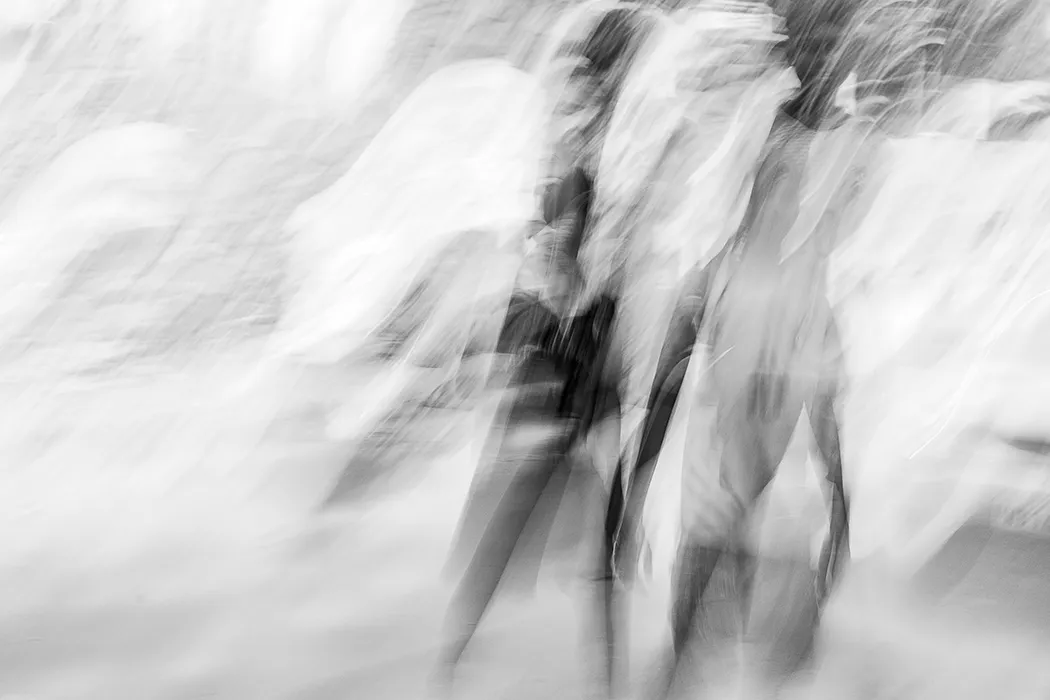
Two young people are walking through the streets, strangers brought together for a moment by the camera’s movement.
Their outlines fade away; the light in the background lends them an otherworldly quality. For the duration of the image, they are inseparable.
The picture leaves open the question of what will come of this encounter – a rapprochement or indifference.
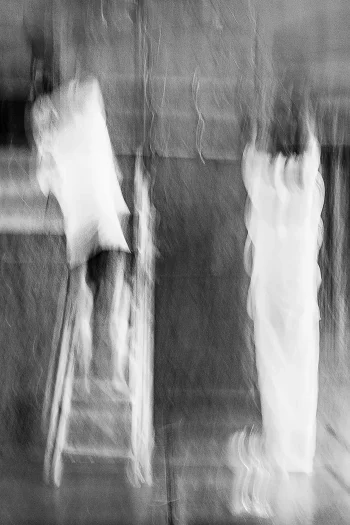
Night. A secluded spot in the midst of the hustle and bustle.
A boy is standing on a ladder, reaching for something that is out of shot. A young woman in white is standing with her back to him, lost in thought.
Two movements that have nothing to do with one another, yet still engage in a dialogue within the image.
The boy reaches up. She stays where she is. Both have their dignity.
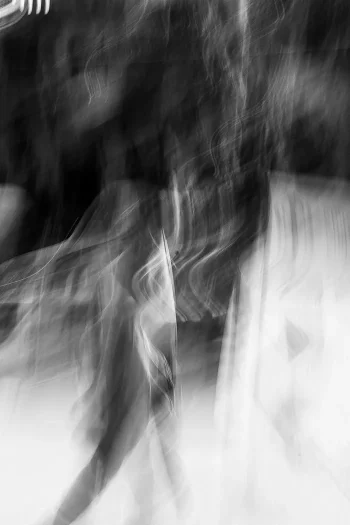
A young man is walking towards a glimmer of light. I was in the middle of taking a photo of something else when I sensed that there was something here.
I turned round and fired. I don’t know where he came from or where he was going.
In the picture, he walks towards the light. That seems to be enough.
As the sun sets on the riverbank, a group of young people dress one of their friends in traditional robes. The water behind them reflects the fading light.
The scene has something of a departure for a journey whose destination is unknown.
Here, cultural tradition and the present moment blend together effortlessly. The question that remains is where this journey is leading.
Some things in Kolkata cannot be captured on camera because they elude. And some reveal themselves precisely because you have stopped looking for them.
These three images explore the point where light ceases to be a physical phenomenon.
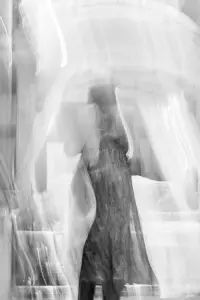
In a mosque, a woman wearing a dress and a headscarf stands in front of a shrine. The light from the shrine is so intense that it almost makes her disappear.
In the picture, the boundary between her and the object of her prayers becomes blurred.
Faith as a physical experience. That is what we see here.
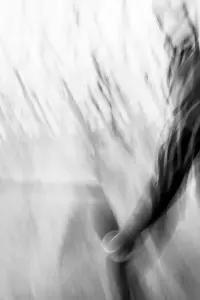
Beyond the flower market, on the riverbank behind Howrah Bridge, poor people wash themselves and their belongings in the murky water.
The picture shows the outline of an arm, a head. The composition suggests something else: as if a hand were reaching out of the darkness, seemingly to help, seemingly to lift.
Whether this hand is holding or grasping remains unclear.
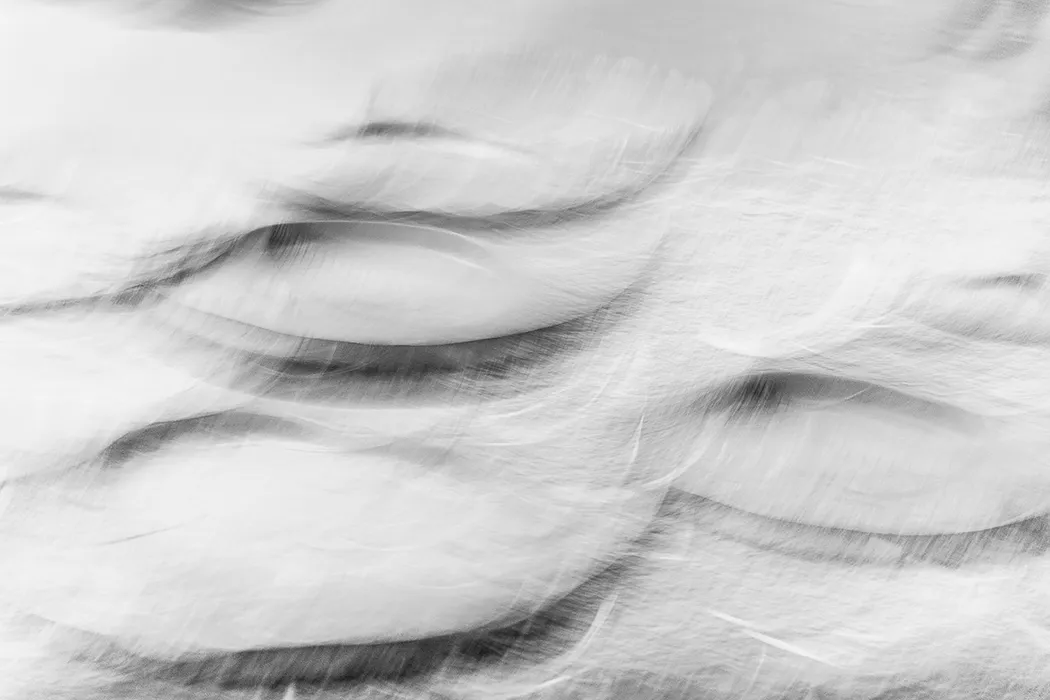
Im Acharya Jagadish Chandra Bose Botanischen Garten treiben Seerosenblätter auf dem Wasser. Ihre kreisrunde Symmetrie wirkt wie Augen.
The movement of the camera sets them in motion, half-open, half-closed, as if they were dreaming or meditating.
Right in the heart of the city: a moment where you don’t feel a trace of the city’s hustle and bustle.
All ten photographs are available as limited original prints.
Each work exists in an edition of 1/1 plus a maximum of 2 Artist Editions. Minimum size 80 cm long edge, printed on museum-quality materials by WhiteWall.
Prices from €850; bespoke advice and custom-made items available on request.
Arles OFF 2024
Beyond the Surface
The work Rickshaw Dreams was part of the international group exhibition
Beyond the Surface,
curated by ProfiFoto
Arles, July 2024
Find out more here
The Stage gallery Bonn
Monochrome
The work Rickshaw Dreams was part of the group exhibition Monochrome, The Stage Gallery Bonn
May/June 2025
Find out more here
All the images in this series were created using Intentional Camera Movement (ICM):
a technique in which the camera is deliberately moved during exposure.
The movement is not random, but a reaction: to the light, to the rhythm of a scene, to whatever presents itself in that moment.
The decision to use black and white is based on the content. Colour would have been distracting in Kolkata, as the city is visually overwhelming.
Black and white forces us to focus on the essentials: light, form, and the interactions between people.
There is no post-processing of the movement. What you see was captured at the moment the shot was taken.
Kolkata never sleeps. The city keeps going, the moments keep coming.
These ten photographs are not a summary; they are a snapshot of something greater than what a camera can capture.
Observe what you see and feel.
We use cookies to optimise our website and our service.