
ICM colour photographs from Namibia
Light as the fourth element, alongside earth, spirit and wind.
16 colour photographs
Kalahari · Sossusvlei · Namib Coast · Naukluft · Twyfelfontein · Erongo
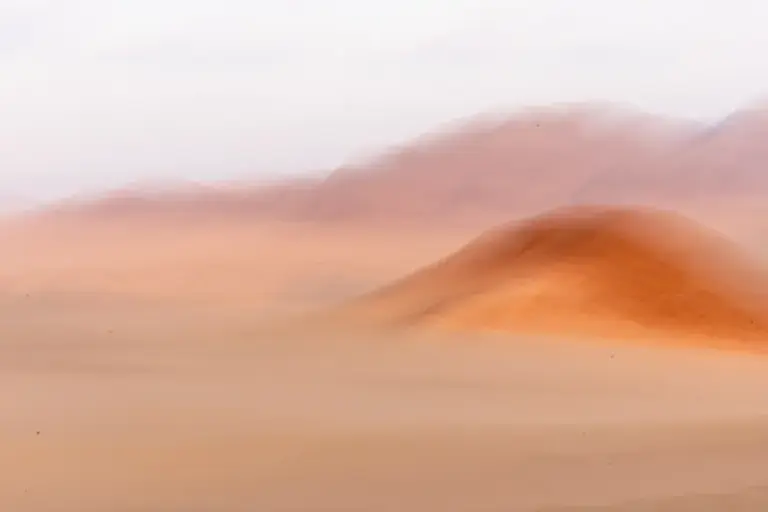
Namibia didn't let me watch.
It pulled me in.
The sand found every gap under my clothes, under my hair, in every pore. One step up the dune, ten steps I slid back down in the sand.
And in the middle of this struggle: silence.
In the round, interwoven stone formations of Omandumba, where the emergence from the earth's core can almost be felt. Walking with the oryx through their territory, a magical moment.
Both were there at the same time. Both were real.
I had seen South Africa, Kenya. None of it prepared me for what Namibia stirred in me. More archaic, more primal, closer to something I can only describe as a reconnection to one's own roots.
During the journey, I kept reading again:
about the formation of the Kalahari, about the Welwitschia, which has been growing for two thousand years, about a continent that holds parts of the primordial earth within it.
Each line deepened what I had long been feeling physically.
The 16 photographs follow the route of this journey, from the Kalahari to Sossusvlei, from the Namib to the coast, from Twyfelfontein to the Erongo Mountains.
Three chapters in which combat and silence repeatedly rebalance themselves.
From the Kalahari to Sossusvlei: the light that falls into the geological depths. Here, the landforms are the oldest, the silence the deepest.
What is deeply rooted endures. Not because it stands still, but because it runs too deep to be swept away.
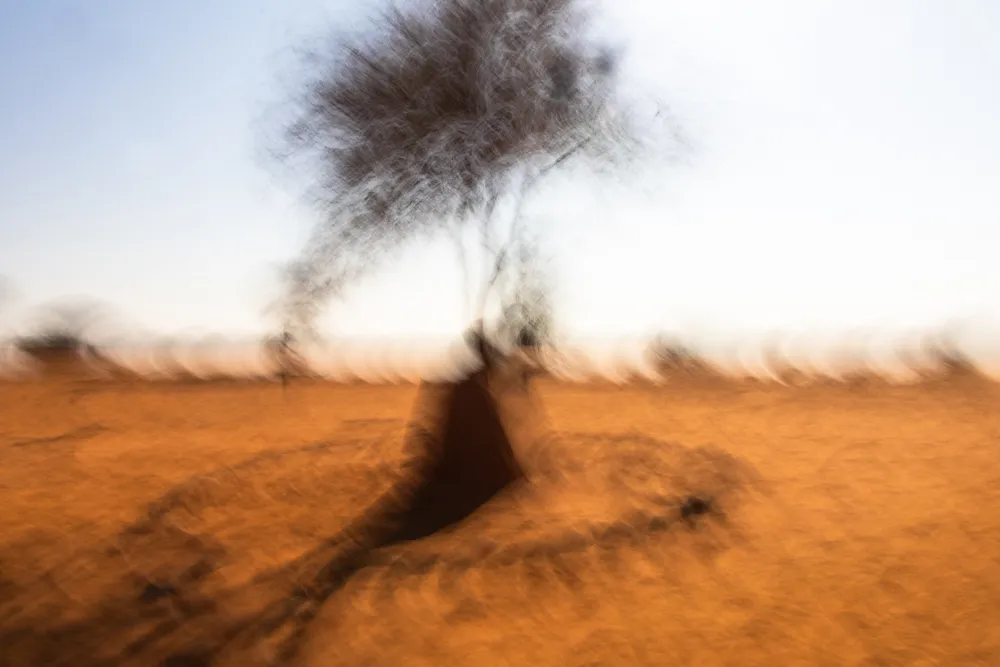
The roots go deeper than the eye can see. In the Kalahari, a tree maintains its stance not by standing still, but by turning, expanding and returning to itself.
The light captures the moment of this turn, traces the outline of the trunk, and then lets it fade back into the surrounding darkness.
What endures here is not the tree alone. It is the relationship between the roots and the earth, between form and the force that shapes it.
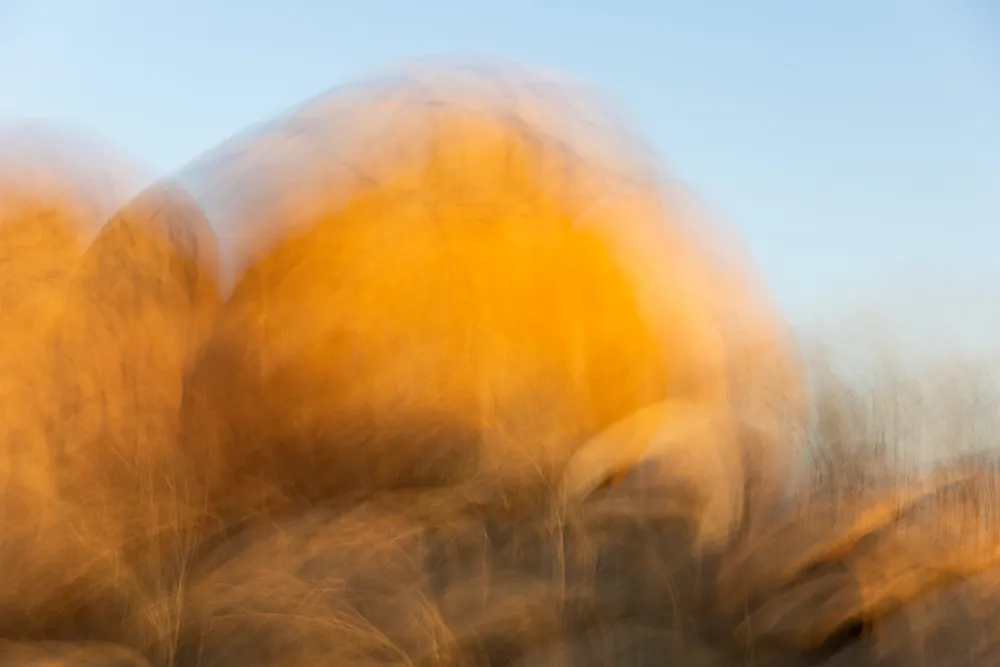
In Omandumba, millions of years of weathering have shaped the rock into a form that is difficult to make sense of.
It sits at the edge of the ridge, rounded, compact, and complete.
The light falls across it and meets no resistance: just one surface after another, each giving way to the next.
The rock did not choose what it has become. But it retains its shape through something that, defying all reason, feeling like intention.
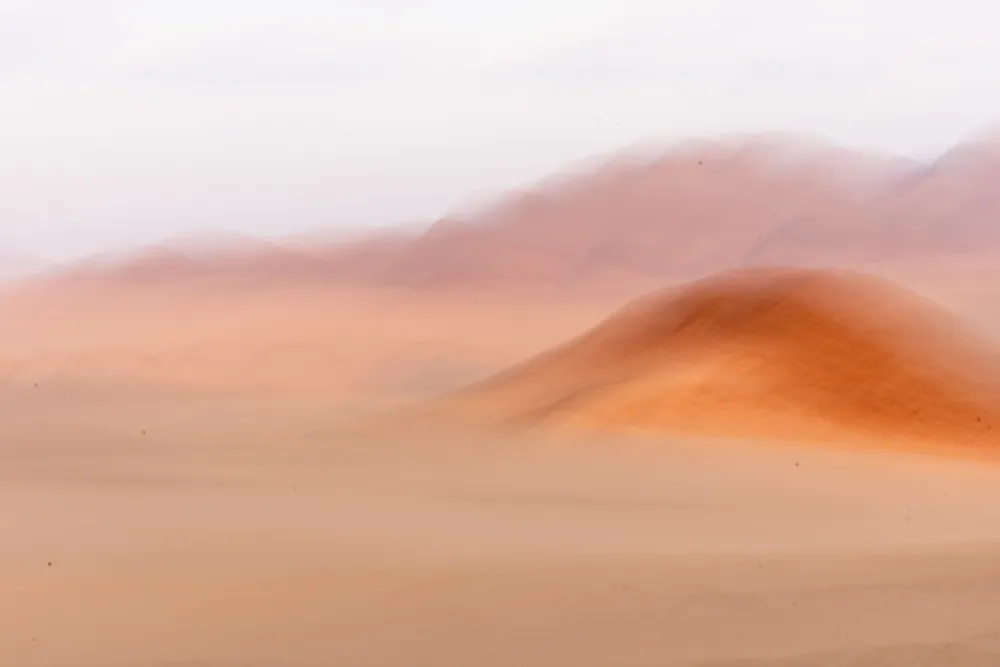
The late afternoon light has a special effect on the sand:
It separates what belongs together.
A ridge catches it completely, holds it, becoming more itself in that moment, whilst the others recede into the landscape around it.
Nothing here stands alone. The shapes lean against one another, share their edges, and move in the same direction.
And yet, for as long as this light lasts, a presence is impossible to miss.
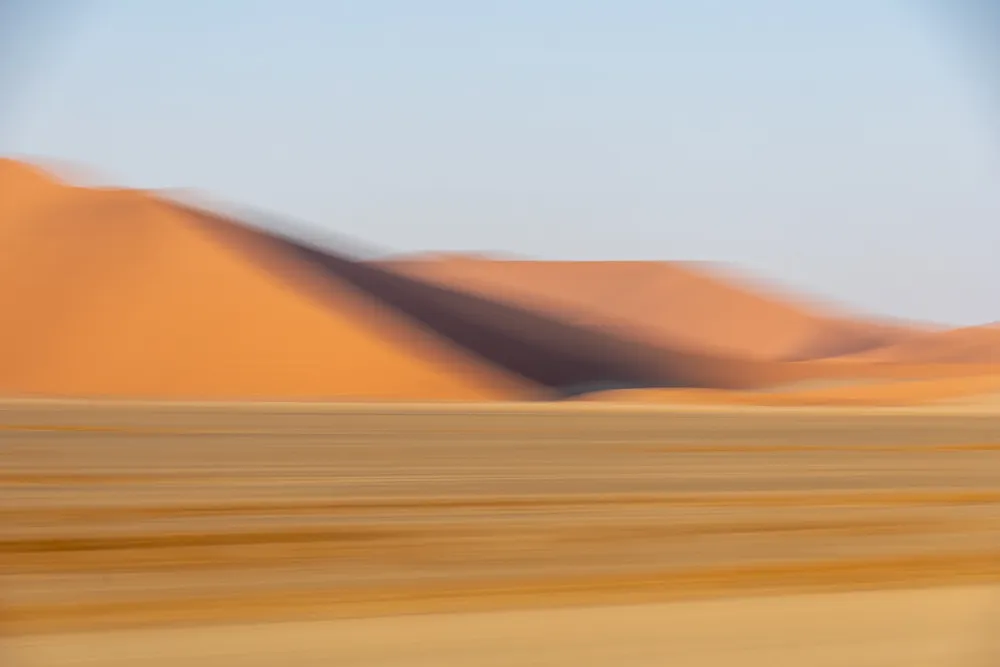
The various layers of sand lend the landscape a depth that only the early light can reveal. At Sossusvlei, the sharp lines of the dune in the foreground give way to the softer contours behind it, and in this transition, something of the desert’s own logic becomes apparent.
The light comes first, before the heat, before the day has settled on anything. It travels the length of the sand, touching every layer at the same shallow angle, and what it finds there is not silence, but ceaseless transformation, written in a language the eye can almost read.
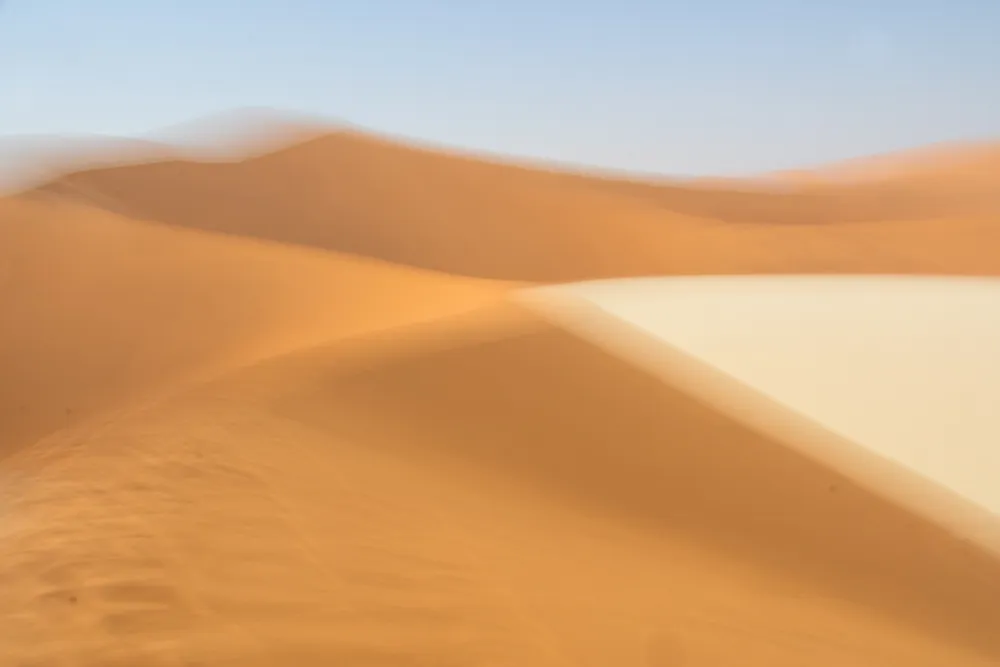
In the heart of Sossusvlei, a geometric pattern unfolds:
The flat expanse of the salt pan meets the sculpted dune ridges in a tension that is anything but still.
The forms balance each other out; each defines the other through contrast.
The light makes it even more visible.
It draws the line between sand and salt, between the undulating and the flat, between what the wind has shaped and what it cannot touch.
From Sossusvlei to the coast near Swakopmund:
the light that the wind alters.
Here, contours dissolve, boundaries blur, and what seemed solid gives way.
The sand found every gap, under the clothes, on the skin. The landscape stops being a backdrop and becomes an event.
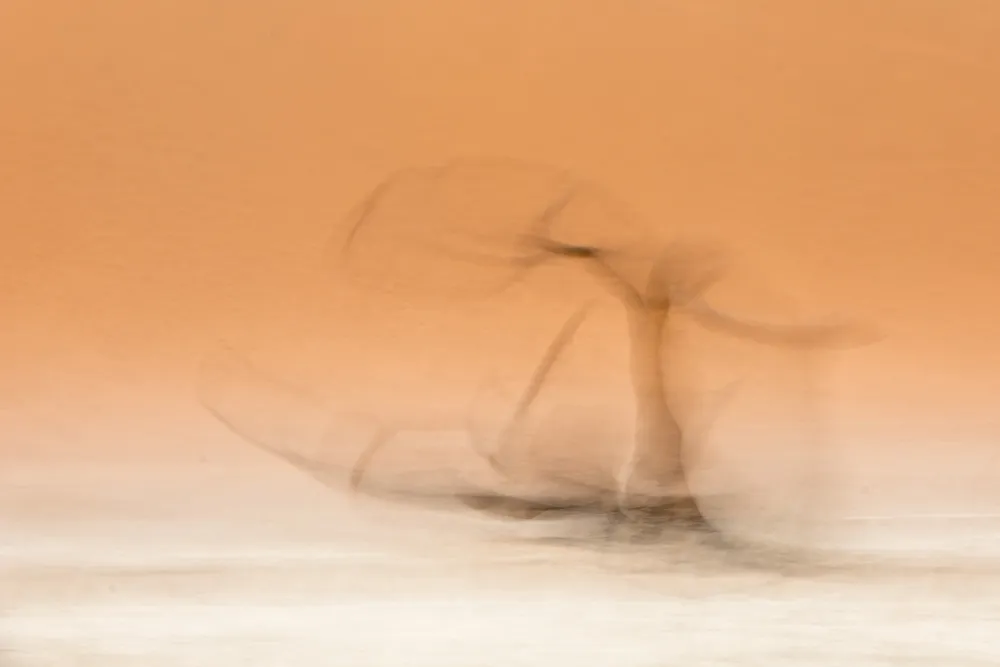
Its roots embody the eternal struggle between holding on and the urge to escape, embedded in the rugged soul of the desert.
The light moves through the swirling dust and finds her all the same.
Whatever the light touches never stops moving.
What it illuminates is not a form, but a question:
How long can this tug-of-war between staying and letting go go on before one of the two prevails?
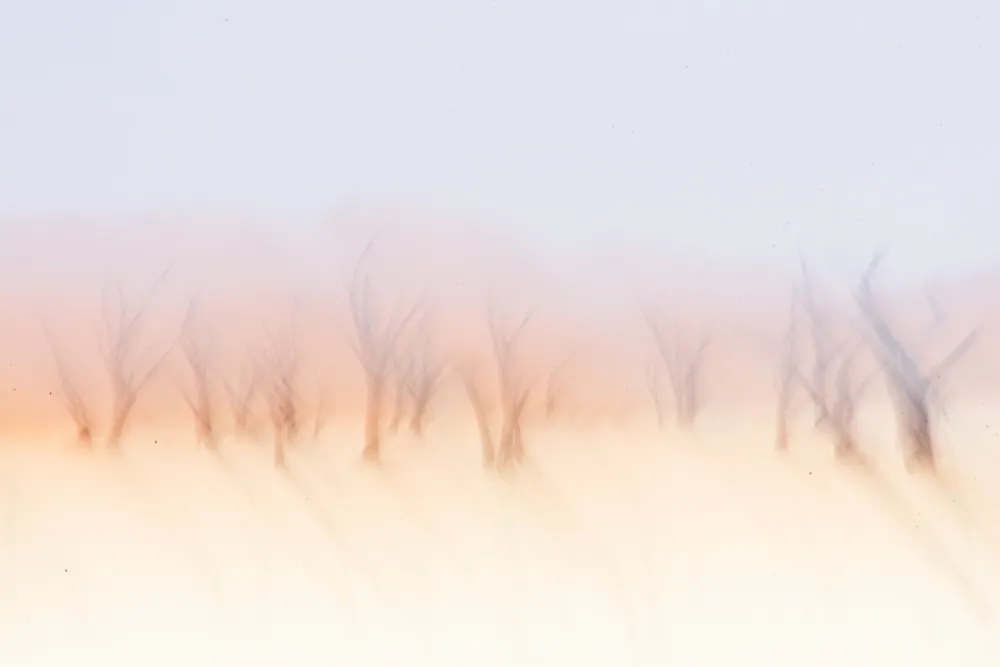
Soft tones blur the boundaries of time and space, whilst the dead trees, brought to life by the camera’s movement, appear like ancient creatures from bygone eras.
Here, the light does not bring anything dead back to life. It does something stranger:
It brings the past into the present, giving a sense of presence to what has vanished.
What appears to be silence carries within it the echo of everything that came before.

Along the Namibian coast, a veil of sea spray settles over the landscape, creating a connection between sky and earth that feels less like the weather and more like breathing.
The sand and the sea merge in a tranquil, almost timeless harmony.
The light doesn’t simply fall here; it diffuses. It spreads across the point where the elements meet, until the horizon is no longer a line, but a sensation.
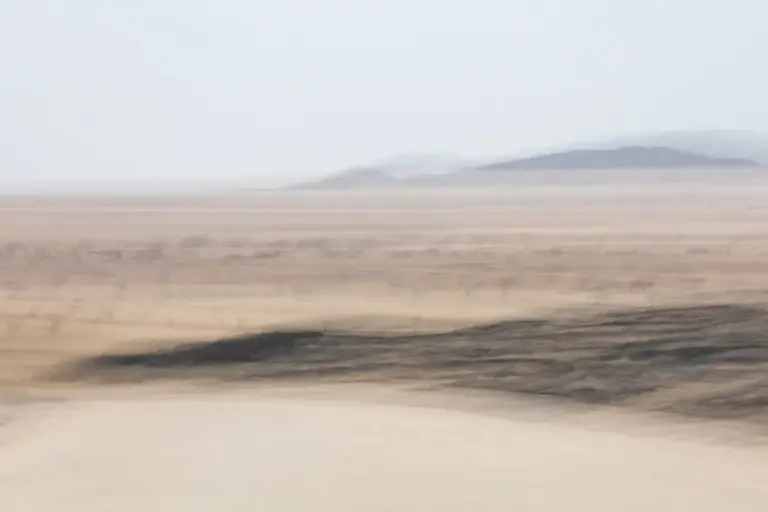
On the drive from the Namib to Swakopmund, the landscape opens up into something vast and unhurried.
Dark ridges rise like silent sentinels above the sand, whilst scattered trees and shrubs bear witness to the life that continues on the fringes of what seems possible.
The light falls evenly, without drama, without favouritism. What it reveals is the quiet harmony between the elements of the earth: the way in which distance and presence can coexist without merging into one another.
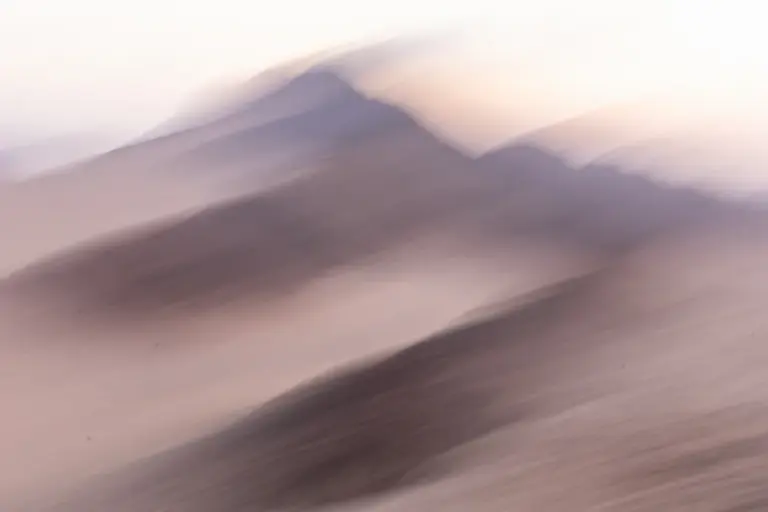
In the Naukluft Mountains, the calm of the day gives way to drama as the last rays of light reveal a fierce sandstorm. Contours blur, and the landscape yields to something greater than itself.
It's hard to breathe.
And yet, within this chaos lies the desert’s most ancient wisdom: that destruction and renewal are not opposites, but partners.
What the storm tears apart, the night quietly puts back together again.
From Twyfelfontein to the Erongo Mountains:
the light falling on the eldest.
Here, time is measured in millennia, not decades.
What remains, remains not out of persistence, but because it belongs so completely to this place that leaving has become unthinkable.

In Twyfelfontein, the sandstorm transforms into something brighter and more ethereal.
What the storm concealed, this light reveals in a different way: not forms, but presences.
No outlines, but rather a hint of movement, of purpose, of life continuing quietly in the vast emptiness.
Survival here has a tenacious quality. Not the drama of endurance, but the steady, unhurried reality of carrying on.
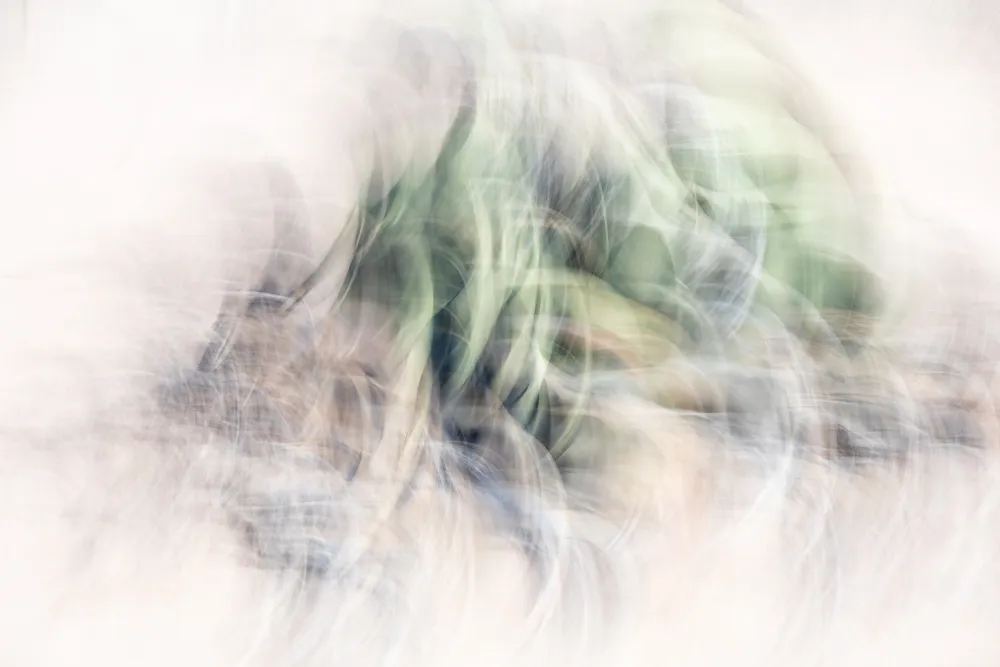
Welwitschia mirabilis carries over 2,000 years of history within its leaves. It has survived climates, landscapes and every human attempt to measure time against something older than memory.
In her presence, our usual sense of scale is turned on its head. It is not the plant that appears small in the desert, but the viewer who becomes a fleeting visitor.
The light falls upon it, just as it has for thousands of years, without knowing what it illuminates, without caring. And the Welwitschia receives it, just as it has always received everything; without haste, simply carrying on.
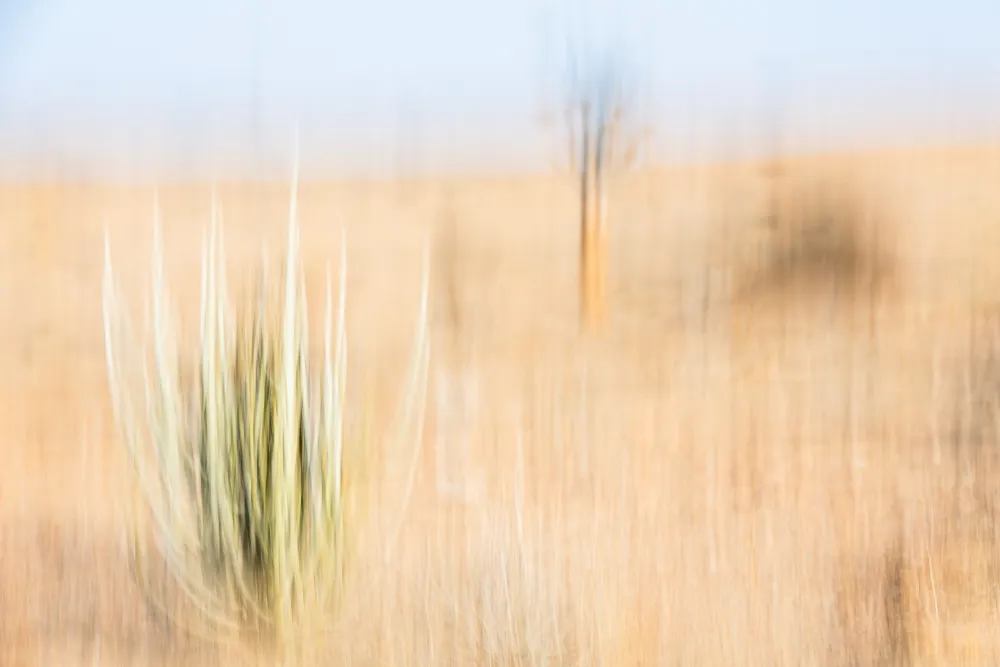
In the seemingly inhospitable terrain of the lunar mountains, the quiver tree stands as a symbol of adaptability.
His form reveals the art of survival in a landscape that offers little yet demands much. There is nothing defiant about his presence, no drama of endurance.
The light reaches him across an open expanse, unhurried and impartial. What it finds is not conflict, but harmony. A form that has found its place here and maintained it through every season that has come and gone without asking permission.
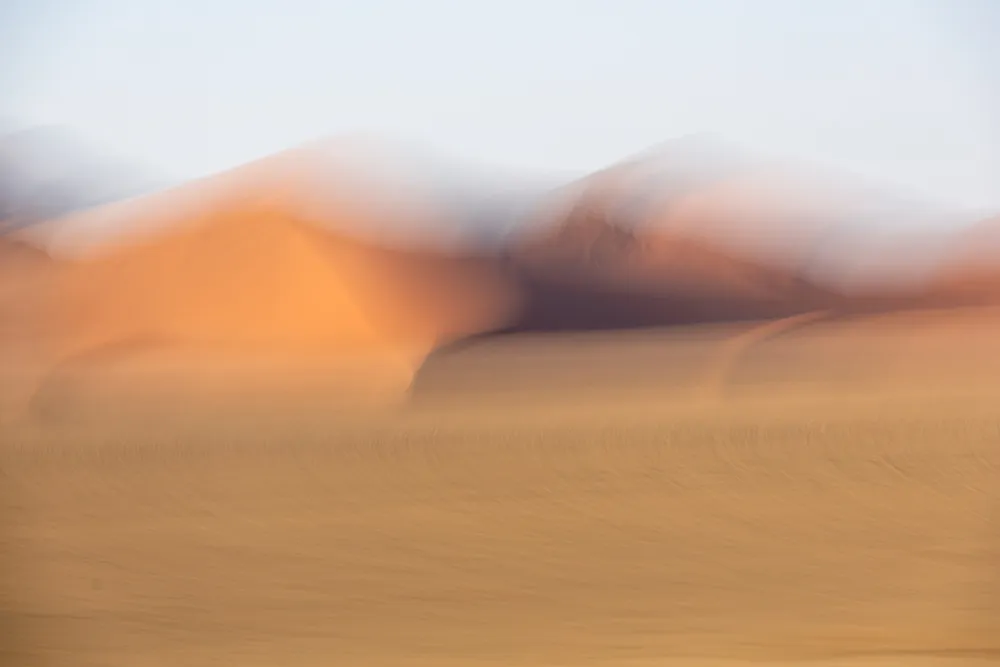
As the sun rises on the way to Sossusvlei, the desert’s vibrant presence unfolds in a collective breath rather than in individual form.
Whereas other images in this series depicted life through individual, defiant figures, here the landscape itself comes to life: the dunes merge gently, swaying, breathing in and out the early morning air.
The light has just arrived and has not yet decided what to make of what it finds. It moves across the sand like a hand stroking a surface in the dark. A hand that, feeling rather than seeing, tries to discover the shape of things before they are named.
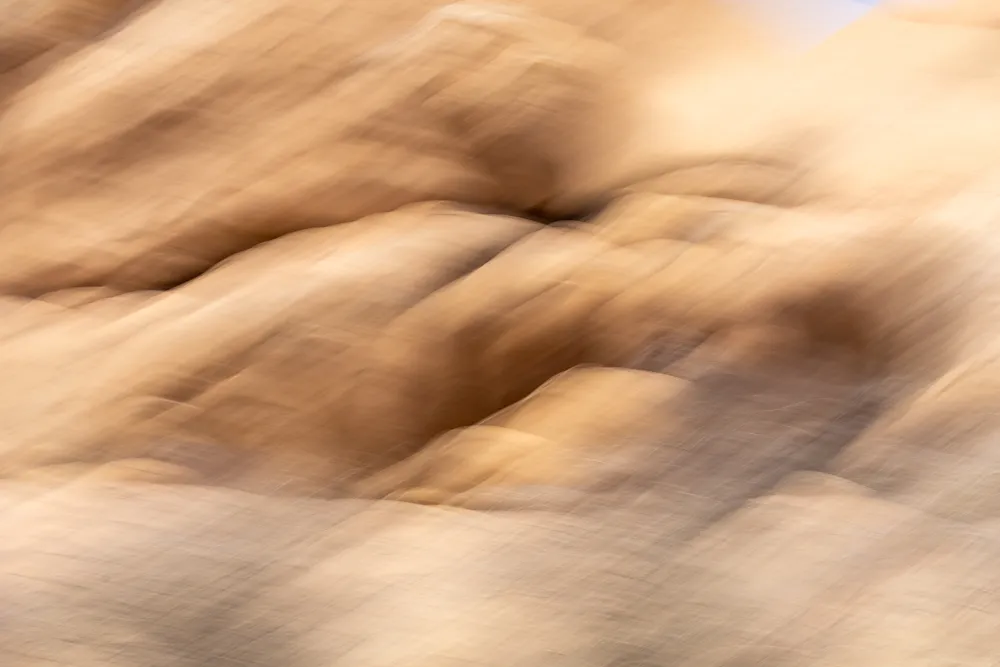
In the Erongo Mountains, rock formations unfold in a spectacle that, paradoxically, conveys the same sense of fluid movement as sand in the wind.
What appears solid reveals itself to be a process, something that is still becoming, still being shaped by forces that make no distinction between rock and air.
The light moves through the composition, finding no clear boundary between the elements.
Earth, Spirit, Wind: the three forces of this series come together here, without hierarchy, woven into a tapestry in which separation is an illusion.
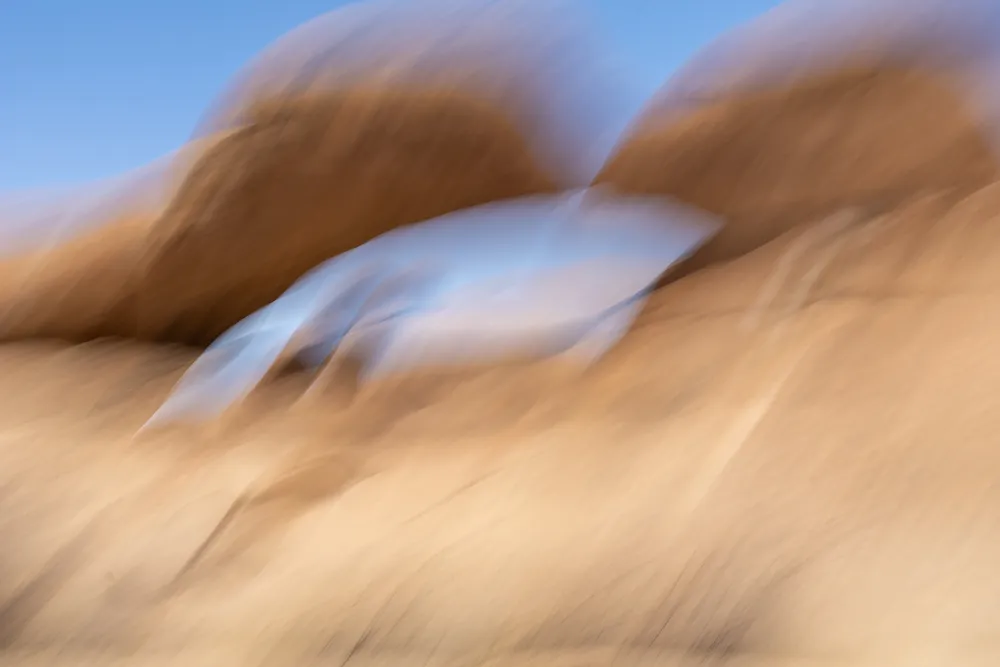
In the Erongo Mountains, certain rock formations do not act as obstacles, but as openings. It is as though the rock had arranged itself to allow passage.
What moves through here has always moved through here: wind, light, time itself.
The light does not pause at the arch. It passes through it, as everything does, and leaves its mark on the stone without altering either. What remains is the arch: open.
This openness is not a void. It is the oldest form of invitation.
All 16 photographs are available as limited original prints.
Each work exists in an edition of 1/1 plus a maximum of 2 Artist Editions. Minimum size 80 cm long edge, printed on museum-quality materials by WhiteWall.
Prices from €1,000, individual consultation and customisation available on request.
Parts of the series
Earth . Spirit . Wind
are part of the 101 Art Book:
Photography Edition 2026,
published by the Arts to Hearts Project.
The publication brings together international perspectives on modern photography and was published in 2026.
Nominee – Fine Art Photography Awards (12th Edition)
In the Namib, the midday heat made the air itself shimmer long before I moved the camera.
The blur that this series carries is therefore not a purely technical decision at the shutter. It begins where the desert itself already distorts what the eye sees.
All images were created through intentional camera movement, using motion blur as a visual language. Not to prevent sharpness, but to make visible that which a frozen image cannot show:
the heat in the air, the wind that dissolves contours, the time that becomes visible in layers of sand.
Optical filters extend the exposure time and enable these shots in bright daylight.
Colour is the material in this series, not the design decision. The dawn red over Sossusvlei. The violet of a sandstorm, in which I could barely breathe. The blue-grey of the coast.
Everything you see is not created in post-processing, but at the moment of capture.
The desert decides for itself what it reveals, at the moment the light arrives.
These 16 photographs are an attempt to capture these moments without explaining them.
We use cookies to optimise our website and our service.